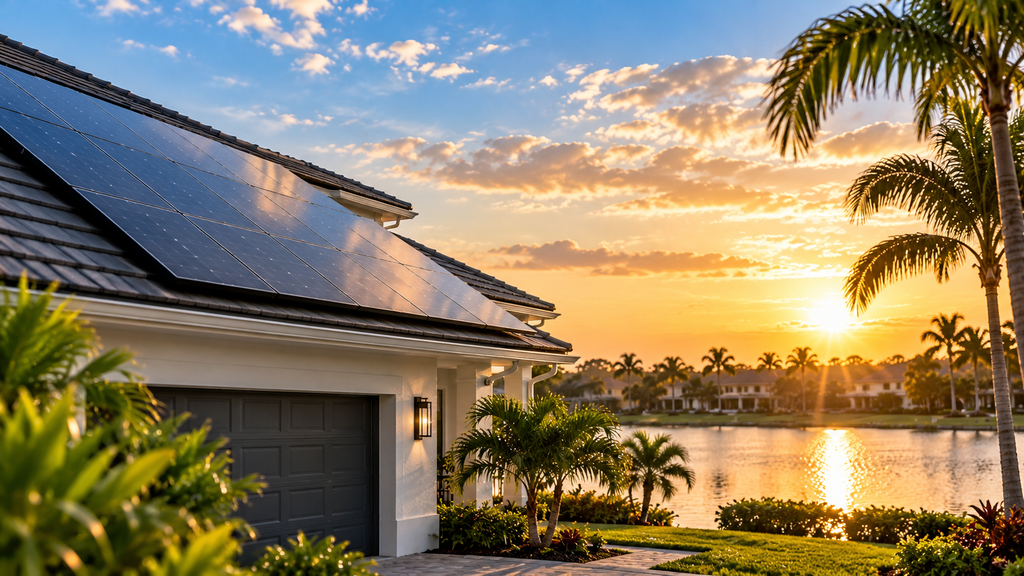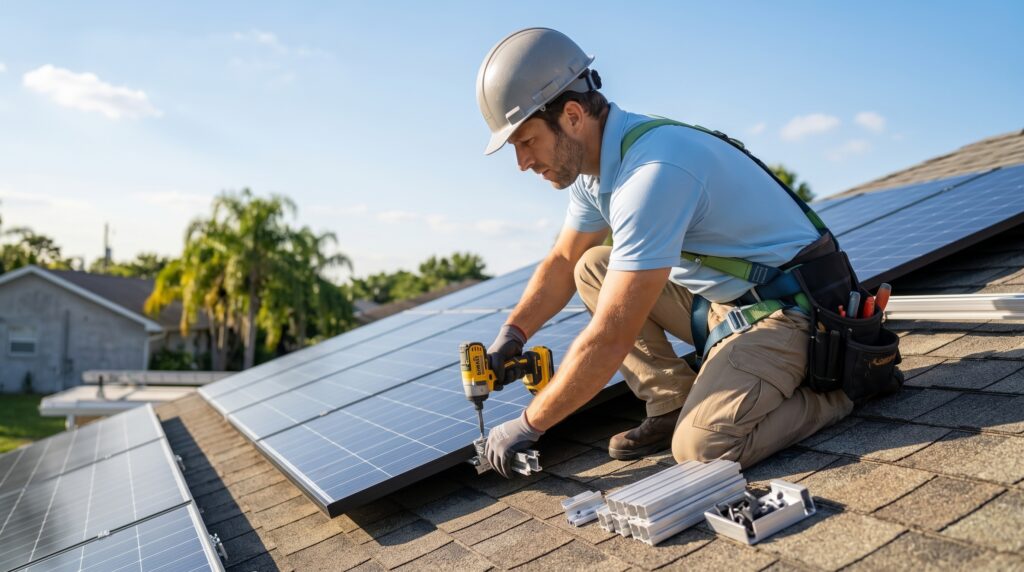


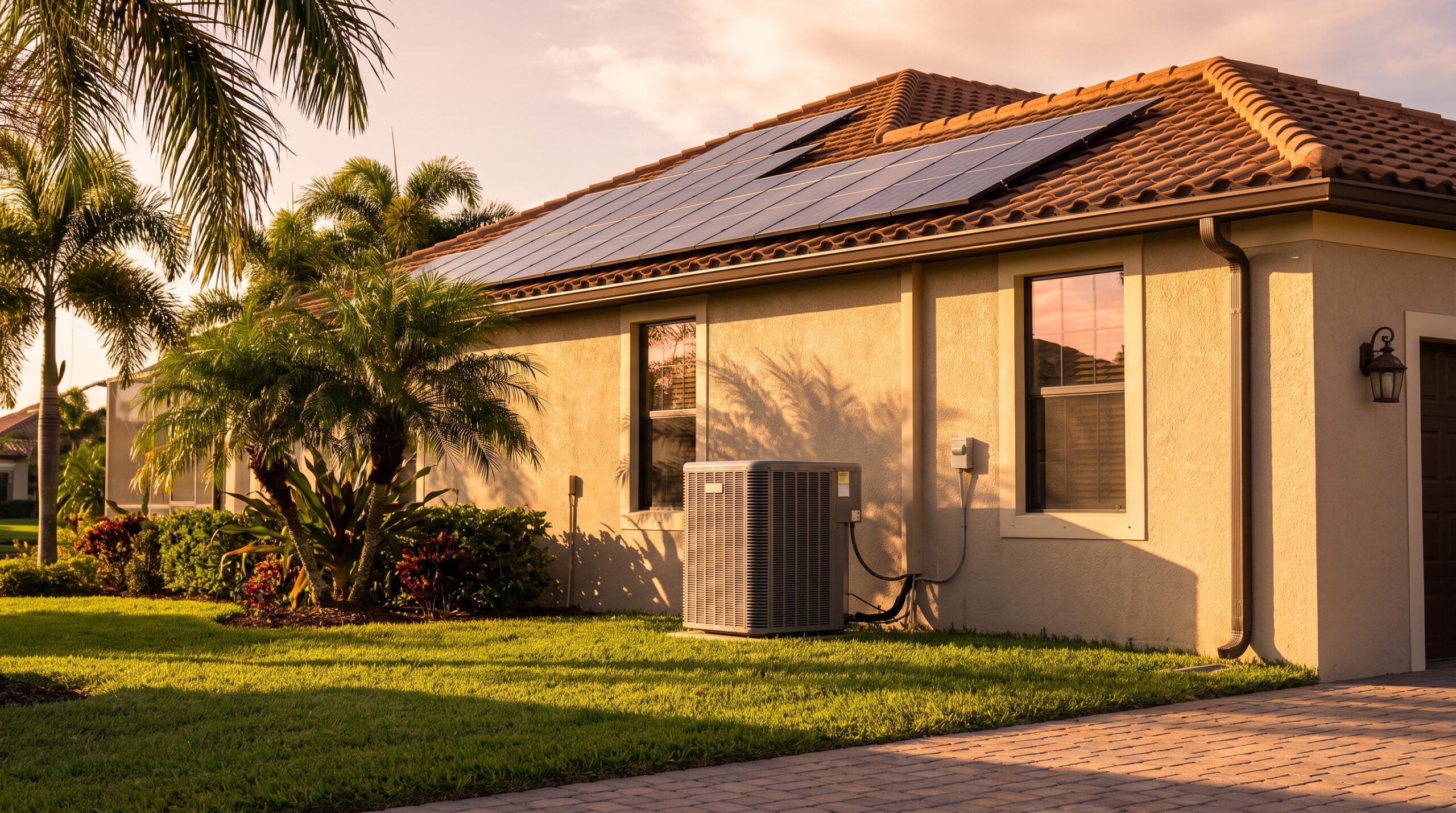
¿Su factura de luz en Florida se incrementó en 100, 200 dólares o incluso más este verano? No es el único. Cada año, los propietarios de viviendas en toda Florida se sorprenden cuando reciben sus facturas de luz de verano. Si bien muchos propietarios suponen que su empresa de servicios públicos simplemente subió las tarifas, la verdad suele ser más complicada.
Respuesta rápida
Para la mayoría de los propietarios de viviendas en Florida, las elevadas facturas de electricidad en verano se deben a:
- Los aparatos de aire acondicionado funcionan durante más tiempo
- Calor y humedad extremos
- Mayor consumo de electricidad
- Bombas para albercas
- Calentadores de agua eléctricos
- Aislamiento deficiente
- Conductos con fugas
- Sistemas de climatización antiguos
La buena noticia: la mayoría de los propietarios pueden reducir su factura de luz mediante mejoras en la eficiencia energética y, para muchos, la energía solar puede generar ahorros a largo plazo.
Cuando las temperaturas superan los 90 y la humedad se mantiene alta, su aire acondicionado tiene que trabajar mucho más para mantener su hogar a una temperatura agradable. Cuanto más tiempo funciona, más electricidad consume y más rápido aumenta su factura mensual.
En Solar Near Me ayudamos a los propietarios de viviendas en Florida a identificar a dónde se destina su energía antes de recomendarles una solución solar. Analizamos su consumo de electricidad, la tarifa de su proveedor de servicios públicos, sus objetivos energéticos para el hogar y cualquier propuesta solar existente, de modo que cada recomendación se base en las necesidades energéticas reales de su hogar, y no en un argumento de venta genérico.
¿Qué es lo que más electricidad consume en su hogar durante el verano?
En la mayoría de los hogares, la refrigeración representa el mayor gasto de energía durante los meses de verano. Su aire acondicionado trabaja más a medida que suben las temperaturas y, si su hogar no está bien aislado, debe funcionar durante más tiempo para mantener una temperatura agradable en su casa.
| Electrodoméstico | Repercusión en la factura de luz de verano | Formas sencillas de reducir el consumo |
| Aire acondicionado | ⭐⭐⭐⭐⭐ | Baje la temperatura del termostato, cambie el filtro |
| Bomba para piscina | ⭐⭐⭐⭐ | Reducir el tiempo de ejecución |
| Calentador de agua eléctrico | ⭐⭐⭐ | Temperatura más baja |
| Secadora de ropa | ⭐⭐⭐ | Seque la ropa al aire libre |
| Hielera | ⭐⭐ | Revise las juntas |
| Iluminación | ⭐ | Lámparas LED |
La mayoría de los propietarios de viviendas en Florida registran sus facturas de electricidad más altas entre junio y septiembre, ya que la refrigeración representa la mayor parte del consumo eléctrico doméstico durante esos meses.
Si su factura se dispara de repente, lo primero que suele revisarse es el aire acondicionado, pero rara vez es el único factor.
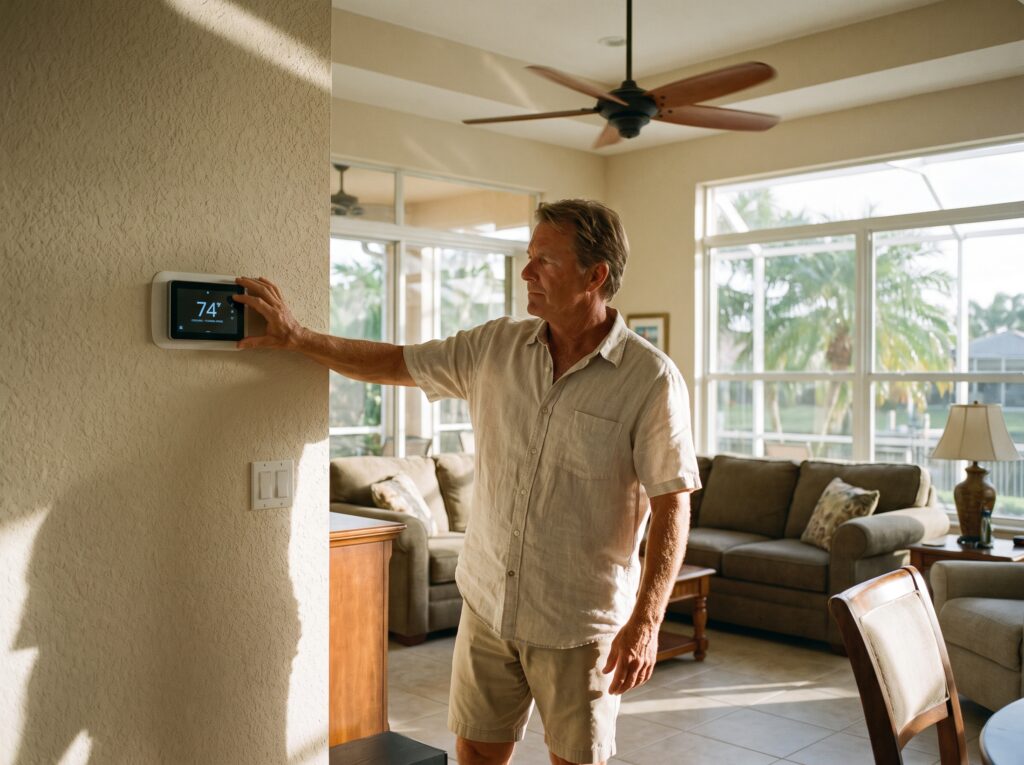
¿Por qué el aire acondicionado consume tanta electricidad?
Su aire acondicionado no consume una cantidad fija de electricidad todos los días.
En cambio, se adapta a las condiciones climáticas del exterior. En un día templado de 75 °F, es posible que su aire acondicionado solo funcione de vez en cuando. En una tarde húmeda de Florida a 95 °F, es posible que funcione casi sin interrupción.
Cada minuto adicional que su sistema está en funcionamiento aumenta el consumo de electricidad. Hay varios factores que pueden hacer que su aire acondicionado trabaje aún más:
- Filtros de aire sucios
- Aislamiento deficiente del ático
- Fugas de aire alrededor de las ventanas y puertas
- Conductos con fugas
- Equipos de climatización obsoletos
- La luz solar directa que entra en su hogar
- Ajustes bajos del termostato
Según el Departamento de Energía de los Estados Unidos, ajustar el termostato a una temperatura demasiado baja aumenta considerablemente los costos de refrigeración, ya que su sistema debe eliminar más calor de su hogar.
Además, muchos propietarios no se dan cuenta de que cada grado por debajo de los 78 °F puede aumentar notablemente el consumo de energía a lo largo del día.
Si su aire acondicionado tiene más de 10 a 12 años, es posible que también funcione con mucha menos eficiencia que los sistemas modernos de alta eficiencia.
Cómo averiguar qué factores influyen en su factura de electricidad
Antes de reemplazar su aire acondicionado o invertir en energía solar, dedique unos minutos a identificar dónde se utiliza realmente su electricidad.
Pregúntese:
✔ ¿Mi aire acondicionado ha estado funcionando casi sin parar?
✔ ¿Han cambiado los ajustes de mi termostato?
✔ ¿Han sido las temperaturas exteriores mucho más altas?
✔ ¿Está sucio mi filtro de aire?
✔ ¿Ha estado funcionando la bomba de mi alberca por más tiempo de lo habitual?
✔ ¿Ha estado alguien en casa con más frecuencia?
✔ ¿He agregado nuevos electrodomésticos recientemente?
✔ ¿Mi factura de luz aumenta constantemente cada verano?
Responder a estas preguntas suele revelar cuál es la principal causa del mayor consumo de energía antes de invertir en mejoras.
Formas gratuitas de reducir su factura de luz hoy mismo
No siempre se necesitan mejoras costosas para reducir su factura de electricidad en verano. A veces, los pequeños cambios generan ahorros sorprendentemente significativos.
Ajuste su termostato a 78 °F:
El Departamento de Energía de EE. UU. recomienda una temperatura de 78 °F cuando se encuentre en casa y un ajuste más alto cuando esté fuera.
Cada grado por debajo de los 78 °F aumenta la cantidad de trabajo que debe realizar su aire acondicionado.
Ahorros potenciales: hasta un 8 % por grado
Cambie su filtro de aire con regularidad:
Los filtros sucios restringen el flujo de aire.
Cambiar el filtro cada uno a tres meses ayuda a mantener la eficiencia y mejora la calidad del aire interior.
Ahorros potenciales: Alrededor del 5 a 15 % en los costos de refrigeración.
Reduzca el tiempo de funcionamiento de la bomba de la alberca:
En la mayoría de los casos, entre 6 y 8 horas al día son suficientes para garantizar una circulación adecuada.
La mayoría de las albercas solo necesitan ese tiempo de funcionamiento para mantenerse limpias.
Ahorros potenciales: Cientos de dólares al año para las viviendas con piscina.
Cierre las persianas y las cortinas de las ventanas que dan al sur durante el día:
Sus ventanas dejan entrar calor radiante incluso cuando el aire acondicionado está encendido.
Al bloquear la luz solar directa, se mantiene una temperatura interior más baja sin que el aire acondicionado tenga que trabajar más.
Selle las fugas de aire alrededor de puertas y ventanas:
Las pequeñas rendijas alrededor de las puertas y ventanas permiten que se escape el aire frío y que entre el aire caliente del exterior.
Weatherstripping and caulking are inexpensive improvements that can help your home stay cooler for longer.
This often has a faster payback than any other upgrade.
Avoid Heating Your Home While Cooking:
Cooking indoors during summer makes your home hotter, forcing your air conditioner to work harder.
Shift oven use to early morning or after sunset if possible. Whenever possible: Use a microwave or air fryer or grill outdoors.
This helps your AC work less while keeping your kitchen more comfortable.
If your AC is more than 10–12 years old, get it inspected:
If your air conditioner is more than 10 years old, routine maintenance may improve efficiency and catch issues before they become costly repairs.
A professional inspection can also identify refrigerant problems, worn components, or airflow restrictions that increase energy use.
Did You Know? A poorly insulated attic can exceed 120°F during a Florida summer. That heat transfers into your living space throughout the day, forcing your air conditioner to run longer just to maintain the same indoor temperature. Many homeowners assume their AC is the problem when the real issue is the amount of heat entering the home. Improving insulation or sealing air leaks can sometimes reduce cooling costs before replacing equipment or investing in solar.
Should You Get a Home Energy Audit?
Before investing thousands of dollars in solar panels or replacing your HVAC system, it’s worth understanding where your home is actually wasting energy.
A professional home energy audit can identify issues such as:
- Hidden duct leaks
- Aislamiento deficiente del ático
- Fugas de aire alrededor de las ventanas y puertas
- Equipos de climatización obsoletos
- High-energy appliances
- Excess standby electricity use
- Opportunities to improve overall efficiency
Sometimes fixing just one or two of these issues can noticeably reduce your electric bill. Whether your goal is lower monthly bills or preparing your home for solar, a professional energy assessment provides valuable insight into where your money is going.
Schedule Your Home Energy Audit Today
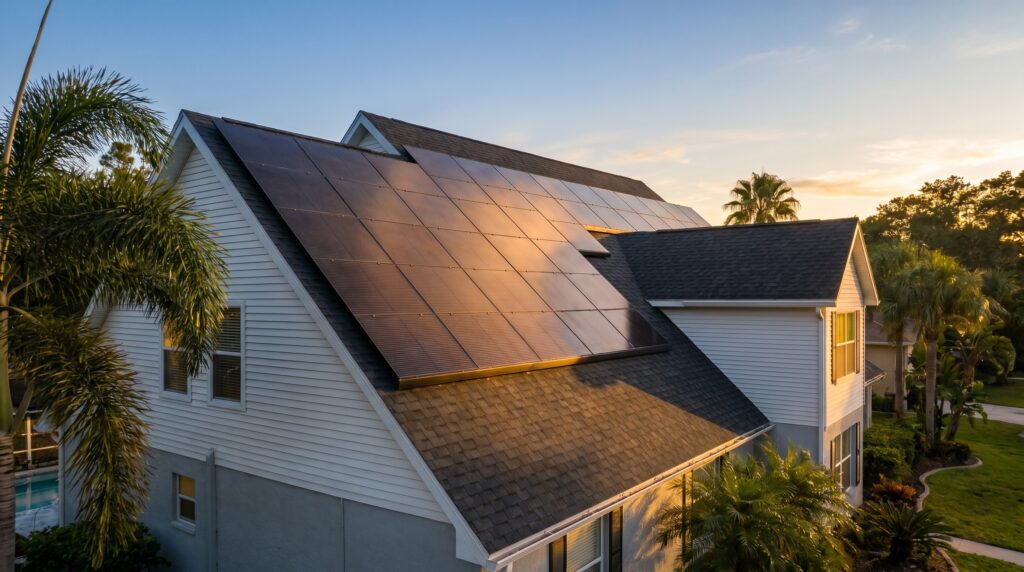
Is Solar the Right Solution for High Summer Electric Bills?
Solar generally delivers the greatest value if you:
- Pay more than $150 per month for electricity.
- Plan to stay in your home for several years.
- Have a roof with good sun exposure and minimal shading.
- Want protection against future utility rate increases.
- Have a newer roof or one with plenty of life remaining.
- Want to reduce your dependence on the electrical grid.
Even though the federal residential solar tax credit expired for new residential systems after December 31, 2025, Florida homeowners can still benefit from:
- Florida’s sales tax exemption on residential solar equipment.
- Florida’s property tax exemption, which prevents added home value from increasing your property taxes.
- Full-retail net metering offered by many major Florida utilities, allowing eligible homeowners to receive bill credits for excess electricity sent back to the grid.
These state benefits continue to make solar an attractive long-term investment for many homeowners.
How Solar Helps Lower High Summer Electric Bills
The biggest contributor to summer electric bills is usually your air conditioner. Fortunately, that’s also when solar panels perform best.
As your solar system produces electricity during sunny daytime hours, your home purchases less electricity from the utility company. If your system produces more electricity than you’re using at that moment, eligible net metering programs allow excess energy to generate bill credits that can offset future electricity usage.
For many homeowners, this means:
- Lower monthly electricity bills.
- Reduced exposure to rising utility rates.
- Greater control over long-term energy costs.
- Predictable energy expenses throughout the year.
As electricity prices continue to rise, many Florida homeowners are exploring whether solar is still worth it in 2026 and whether their house is a good fit for solar before making a decision. More homeowners are also turning to solar as a long-term way to lower their electricity bills and reduce their dependence on the grid.
If high summer electric bills are becoming a yearly problem, we’ll help you understand your options before you commit to anything. We’ll review your energy usage, explain what’s driving your costs, and determine whether solar is the right long-term solution for your home.
Should You Replace Your AC Before Installing Solar?
Not necessarily. If your air conditioner is more than 12–15 years old and struggling to cool your home, replacing it before sizing a solar system may produce better long-term results.
A newer, high-efficiency HVAC system often reduces electricity usage, allowing for a smaller solar installation. That’s one reason Solar Near Me reviews your home’s entire energy profile before recommending a system.
Did You Know?
Your air conditioner doesn’t use the most electricity because it’s “powerful.” It uses the most electricity because it runs for hours at a time during a Florida summer.
A refrigerator runs all day too but it cycles on and off. An AC may run continuously during the hottest afternoons.
¿Por qué los propietarios eligen Solar Near Me?
Choosing solar is a major financial decision. Unfortunately, many homeowners receive quotes from companies that only sell one product or represent one installer.
At Solar Near Me, we do things differently. As an independent Florida solar brokerage, we compare multiple trusted installers, financing options, and equipment manufacturers to help you make an informed decision not a rushed one.
Our recommendations are based on:
- Your home’s actual electricity usage.
- Your roof’s suitability for solar.
- Your utility provider.
- Your long-term financial goals.
- System performance not sales commissions.
Whether you decide to install solar now, later, or not at all, our priority is helping you understand your options so you can make the best decision for your home.
Preguntas frecuentes
Florida’s combination of heat and humidity forces AC systems to work harder and run longer than in drier hot states like Arizona.
Air conditioning accounts for just over 27% of energy consumption in a typical Florida home more than four times the national average.
The result is higher usage even when per-kWh rates are below the national average.
Even if you don’t change the settings on your air conditioner, the outside temperature affects your usage more energy is used to maintain the same temperature on a 95-degree day than on a 75-degree day.
Your thermostat tells the system what temperature to hit; it doesn’t control how hard the system has to work to get there.
No. The federal residential solar tax credit (the 30% credit under Section 25D) expired December 31, 2025. It is no longer available for new residential solar installations. Florida’s sales tax exemption, property tax exemption, and full-retail net metering are still active and remain the primary financial drivers for going solar in the state.
Solar panels produce the most power during the sunniest hours of the day the same hours your AC is working hardest. That production offsets what you’d otherwise buy from the grid. Combined with Florida’s full-retail net metering (for FPL, Duke, and TECO customers), any excess power your panels produce earns a credit toward future bills. A properly sized system can dramatically reduce or eliminate your summer grid charges.
Set your thermostat to 78°F when you’re home and as high as comfortable when you’re away. That single change, combined with ceiling fans running counterclockwise, can meaningfully cut your cooling costs without any equipment purchase.
¿Ya cuenta con una cotización de energía solar?
Before signing a 20–25 year agreement, ask:
✔ Is the system sized using my last 12 months of electricity usage?
✔ Which panels are being installed?
✔ What inverter is included?
✔ Are the production estimates realistic?
✔ ¿Qué garantías se incluyen?
✔ Can I compare another proposal?
Many homeowners discover that two nearly identical quotes recommend completely different systems.
Two solar proposals can look almost identical on the surface while recommending completely different system sizes, production estimates, equipment, and financing terms. Before you sign a 20-to-25-year agreement, it’s worth having someone review your 12-month usage data against the proposed system size and estimated production not just the monthly payment.
At Solar Near Me, we act as your independent solar advisor not just another installer. We compare proposals from trusted Florida installers, review your home’s 12-month energy usage, evaluate system sizing and production estimates, and explain the differences in plain English. Our goal is to help you choose the solution that’s right for your home, even if that means waiting until you’re ready.
Don’t Guess Why Your Electric Bill Is High
High summer electric bills can be frustrating, but they usually have a clear explanation. Whether it’s an aging air conditioner, poor insulation, rising utility rates, or simply Florida’s extreme summer heat, understanding the cause is the first step toward lowering your costs.
If you’re wondering whether solar could help reduce your electric bill, Solar Near Me can review your home’s energy usage, explain your options, and help you decide whether solar is the right long-term investment. No pressure. Just honest advice from an independent Florida solar brokerage.
¿Ya cuenta con una cotización de energía solar?