

Did your Florida electric bill jump by $100, $200, or even more this summer? You’re not alone. Every year, homeowners across Florida are surprised when their summer electric bills arrive. While many homeowners assume their utility company simply raised rates, the truth is usually more complicated.
Quick Answer
For most Florida homeowners, high summer electric bills are caused by:
- Air conditioners running longer
- Extreme heat and humidity
- Higher electricity usage
- Pool pumps
- Electric water heaters
- Poor insulation
- Leaky ductwork
- Older HVAC systems
The good news: Most homeowners can lower their electric bill through energy efficiency improvements and for many, solar can provide long-term savings.
When temperatures climb into the 90s and humidity stays high, your AC has to work much harder to keep your home comfortable. The longer it runs, the more electricity it uses, and the faster your monthly bill increases.
At Solar Near Me, we help Florida homeowners identify where their energy is going before recommending a solar solution. We review your electricity usage, utility rate, home energy goals, and any existing solar proposals so every recommendation is based on your home’s actual energy needs-not a one-size-fits-all sales pitch.
What Uses the Most Electricity in Your Home During the Summer?
For most homes, cooling is the largest energy expense during the summer months. Your air conditioner works harder as temperatures rise, and if your home isn’t well insulated, it has to run even longer to keep your house comfortable.
| Appliance | Impact on Summer Electric Bill | Easy Ways to Reduce Usage |
| Air Conditioner | ⭐⭐⭐⭐⭐ | Reduce thermostat, replace filter |
| Pool Pump | ⭐⭐⭐⭐ | Reduce runtime |
| Electric Water Heater | ⭐⭐⭐ | Lower temperature |
| Clothes Dryer | ⭐⭐⭐ | Air dry clothes |
| Refrigerator | ⭐⭐ | Check seals |
| Lighting | ⭐ | LED bulbs |
Most Florida homeowners experience their highest electric bills between June and September because cooling accounts for the largest share of household electricity use during these months.
If your bill suddenly spikes, your air conditioner is usually the first place to investigate, but it’s rarely the only factor.
Why does Air Conditioning Use So Much Electricity?
Your air conditioner doesn’t use a fixed amount of electricity every day.
Instead, it responds to the weather outside. On a mild 75°F day, your AC may only run occasionally. On a humid 95°F Florida afternoon, it may run almost continuously.
Every extra minute your system operates increases electricity consumption. Several factors can make your AC work even harder:
- Dirty air filters
- Poor attic insulation
- Air leaks around windows and doors
- Leaky ductwork
- Aging HVAC equipment
- Direct sunlight entering your home
- Low thermostat settings
According to the U.S. Department of Energy, setting your thermostat too low significantly increases cooling costs because your system has to remove more heat from your home.
Many homeowners also don’t realize that every degree below 78°F can noticeably increase energy consumption throughout the day.
If your air conditioner is more than 10–12 years old, it may also be operating far less efficiently than modern high-efficiency systems.
How to Find Out What’s Driving Your Electric Bill
Before replacing your air conditioner or investing in solar, spend a few minutes identifying where your electricity is actually being used.
Ask yourself:
✔ Has my AC been running almost constantly?
✔ Did my thermostat settings change?
✔ Have outdoor temperatures been much hotter?
✔ Is my air filter dirty?
✔ Has my pool pump been running longer?
✔ Has anyone been home more often?
✔ Have I added new appliances recently?
✔ Is my electric bill consistently rising every summer?
Answering these questions often points to the biggest source of higher energy use before spending money on upgrades.
Free Ways to Lower Your Electric Bill Today
You don’t always need expensive upgrades to reduce your summer electricity bill. Sometimes small changes produce surprisingly meaningful savings.
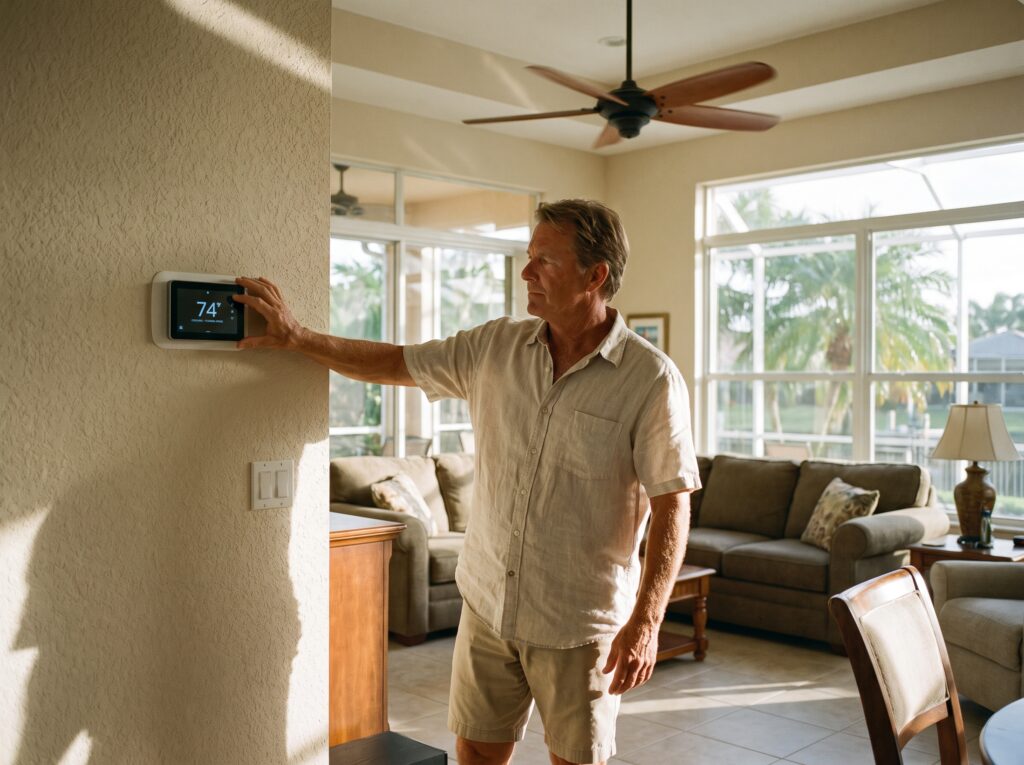
Set your thermostat to 78°F:
The U.S. Department of Energy recommends 78°F when you’re home and a higher setting when you’re away.
Every degree below 78°F increases the amount of work your air conditioner must do.
Potential Savings: Up to 8% per degree
Replace Your Air Filter Regularly:
Dirty filters reestrict air flow.
Replacing your filter every one to three months helps maintain efficiency and improves indoor air quality.
Potential Savings: Around 5–15% on cooling costs.
Reduce Pool Pump Runtime:
In most cases, 6–8 hours per day provides adequate circulation.
Most pools only need that much runtime to stay clear.
Potential Savings: Hundreds of dollars annually for homes with pools.
Close blinds and curtains on south-facing windows during the day:
Your windows let in radiant heat even when the AC is running.
Blocking direct sun keeps the indoor temperature lower without the AC doing extra work.
Seal Air Leaks Around Doors and Windows:
Small gaps around doors and windows allow cool air to escape while letting hot outdoor air enter.
Weatherstripping and caulking are inexpensive improvements that can help your home stay cooler for longer.
This often has a faster payback than any other upgrade.
Avoid Heating Your Home While Cooking:
Cooking indoors during summer makes your home hotter, forcing your air conditioner to work harder.
Shift oven use to early morning or after sunset if possible. Whenever possible: Use a microwave or air fryer or grill outdoors.
This helps your AC work less while keeping your kitchen more comfortable.
If your AC is more than 10–12 years old, get it inspected:
If your air conditioner is more than 10 years old, routine maintenance may improve efficiency and catch issues before they become costly repairs.
A professional inspection can also identify refrigerant problems, worn components, or airflow restrictions that increase energy use.
Did You Know? A poorly insulated attic can exceed 120°F during a Florida summer. That heat transfers into your living space throughout the day, forcing your air conditioner to run longer just to maintain the same indoor temperature. Many homeowners assume their AC is the problem when the real issue is the amount of heat entering the home. Improving insulation or sealing air leaks can sometimes reduce cooling costs before replacing equipment or investing in solar.
Should You Get a Home Energy Audit?
Before investing thousands of dollars in solar panels or replacing your HVAC system, it’s worth understanding where your home is actually wasting energy.
A professional home energy audit can identify issues such as:
- Hidden duct leaks
- Poor attic insulation
- Air leaks around windows and doors
- Aging HVAC equipment
- High-energy appliances
- Excess standby electricity use
- Opportunities to improve overall efficiency
Sometimes fixing just one or two of these issues can noticeably reduce your electric bill. Whether your goal is lower monthly bills or preparing your home for solar, a professional energy assessment provides valuable insight into where your money is going.
Schedule Your Home Energy Audit Today
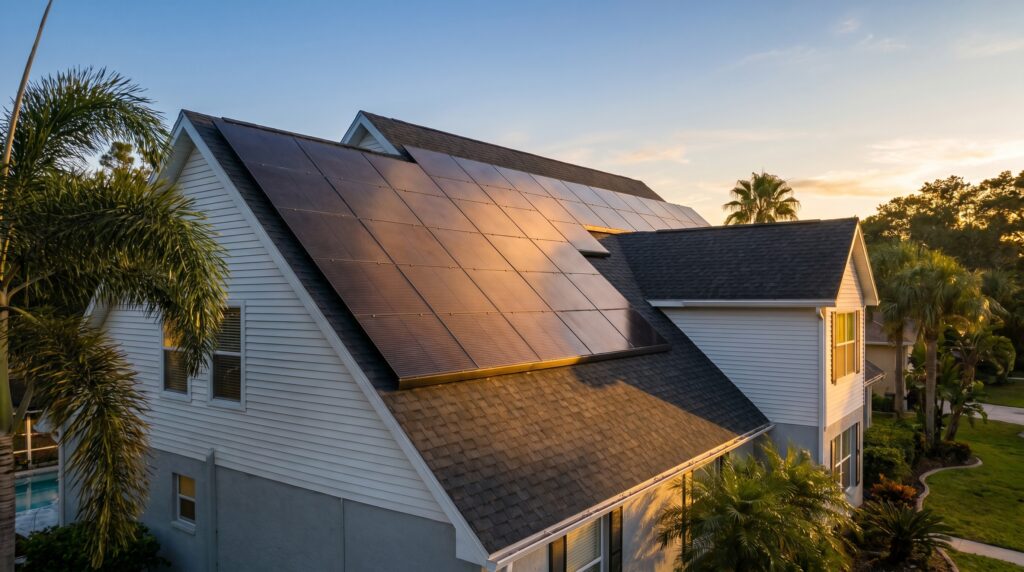
Is Solar the Right Solution for High Summer Electric Bills?
Solar generally delivers the greatest value if you:
- Pay more than $150 per month for electricity.
- Plan to stay in your home for several years.
- Have a roof with good sun exposure and minimal shading.
- Want protection against future utility rate increases.
- Have a newer roof or one with plenty of life remaining.
- Want to reduce your dependence on the electrical grid.
Even though the federal residential solar tax credit expired for new residential systems after December 31, 2025, Florida homeowners can still benefit from:
- Florida’s sales tax exemption on residential solar equipment.
- Florida’s property tax exemption, which prevents added home value from increasing your property taxes.
- Full-retail net metering offered by many major Florida utilities, allowing eligible homeowners to receive bill credits for excess electricity sent back to the grid.
These state benefits continue to make solar an attractive long-term investment for many homeowners.
How Solar Helps Lower High Summer Electric Bills
The biggest contributor to summer electric bills is usually your air conditioner. Fortunately, that’s also when solar panels perform best.
As your solar system produces electricity during sunny daytime hours, your home purchases less electricity from the utility company. If your system produces more electricity than you’re using at that moment, eligible net metering programs allow excess energy to generate bill credits that can offset future electricity usage.
For many homeowners, this means:
- Lower monthly electricity bills.
- Reduced exposure to rising utility rates.
- Greater control over long-term energy costs.
- Predictable energy expenses throughout the year.
As electricity prices continue to rise, many Florida homeowners are exploring whether solar is still worth it in 2026 and whether their house is a good fit for solar before making a decision. More homeowners are also turning to solar as a long-term way to lower their electricity bills and reduce their dependence on the grid.
If high summer electric bills are becoming a yearly problem, we’ll help you understand your options before you commit to anything. We’ll review your energy usage, explain what’s driving your costs, and determine whether solar is the right long-term solution for your home.
Should You Replace Your AC Before Installing Solar?
Not necessarily. If your air conditioner is more than 12–15 years old and struggling to cool your home, replacing it before sizing a solar system may produce better long-term results.
A newer, high-efficiency HVAC system often reduces electricity usage, allowing for a smaller solar installation. That’s one reason Solar Near Me reviews your home’s entire energy profile before recommending a system.
Did You Know?
Your air conditioner doesn’t use the most electricity because it’s “powerful.” It uses the most electricity because it runs for hours at a time during a Florida summer.
A refrigerator runs all day too but it cycles on and off. An AC may run continuously during the hottest afternoons.
Why Homeowners Choose Solar Near Me
Choosing solar is a major financial decision. Unfortunately, many homeowners receive quotes from companies that only sell one product or represent one installer.
At Solar Near Me, we do things differently. As an independent Florida solar brokerage, we compare multiple trusted installers, financing options, and equipment manufacturers to help you make an informed decision not a rushed one.
Our recommendations are based on:
- Your home’s actual electricity usage.
- Your roof’s suitability for solar.
- Your utility provider.
- Your long-term financial goals.
- System performance not sales commissions.
Whether you decide to install solar now, later, or not at all, our priority is helping you understand your options so you can make the best decision for your home.
FAQ
Florida’s combination of heat and humidity forces AC systems to work harder and run longer than in drier hot states like Arizona.
Air conditioning accounts for just over 27% of energy consumption in a typical Florida home more than four times the national average.
The result is higher usage even when per-kWh rates are below the national average.
Even if you don’t change the settings on your air conditioner, the outside temperature affects your usage more energy is used to maintain the same temperature on a 95-degree day than on a 75-degree day.
Your thermostat tells the system what temperature to hit; it doesn’t control how hard the system has to work to get there.
No. The federal residential solar tax credit (the 30% credit under Section 25D) expired December 31, 2025. It is no longer available for new residential solar installations. Florida’s sales tax exemption, property tax exemption, and full-retail net metering are still active and remain the primary financial drivers for going solar in the state.
Solar panels produce the most power during the sunniest hours of the day the same hours your AC is working hardest. That production offsets what you’d otherwise buy from the grid. Combined with Florida’s full-retail net metering (for FPL, Duke, and TECO customers), any excess power your panels produce earns a credit toward future bills. A properly sized system can dramatically reduce or eliminate your summer grid charges.
Set your thermostat to 78°F when you’re home and as high as comfortable when you’re away. That single change, combined with ceiling fans running counterclockwise, can meaningfully cut your cooling costs without any equipment purchase.
Already Have a Solar Quote?
Before signing a 20–25 year agreement, ask:
✔ Is the system sized using my last 12 months of electricity usage?
✔ Which panels are being installed?
✔ What inverter is included?
✔ Are the production estimates realistic?
✔ What warranties are included?
✔ Can I compare another proposal?
Many homeowners discover that two nearly identical quotes recommend completely different systems.
Two solar proposals can look almost identical on the surface while recommending completely different system sizes, production estimates, equipment, and financing terms. Before you sign a 20-to-25-year agreement, it’s worth having someone review your 12-month usage data against the proposed system size and estimated production not just the monthly payment.
At Solar Near Me, we act as your independent solar advisor not just another installer. We compare proposals from trusted Florida installers, review your home’s 12-month energy usage, evaluate system sizing and production estimates, and explain the differences in plain English. Our goal is to help you choose the solution that’s right for your home, even if that means waiting until you’re ready.
Don’t Guess Why Your Electric Bill Is High
High summer electric bills can be frustrating, but they usually have a clear explanation. Whether it’s an aging air conditioner, poor insulation, rising utility rates, or simply Florida’s extreme summer heat, understanding the cause is the first step toward lowering your costs.
If you’re wondering whether solar could help reduce your electric bill, Solar Near Me can review your home’s energy usage, explain your options, and help you decide whether solar is the right long-term investment. No pressure. Just honest advice from an independent Florida solar brokerage.
Already Have a Solar Quote?