

Yes. A properly designed solar system can significantly offset the electricity your air conditioner uses. In Florida, where cooling is often the largest part of a home’s electric bill, solar and air conditioning work surprisingly well together because both peak during sunny afternoons.
Can Solar Panels Lower Your Air Conditioning Costs in Florida?
Why Air Conditioning Makes Up Such a Large Part of Florida Electric Bills
Every summer, thousands of Florida homeowners open their electric bill and wonder the same thing:
“Why is my air conditioner costing so much?”
The answer is simple. Your AC is working harder than almost any other appliance in your home.
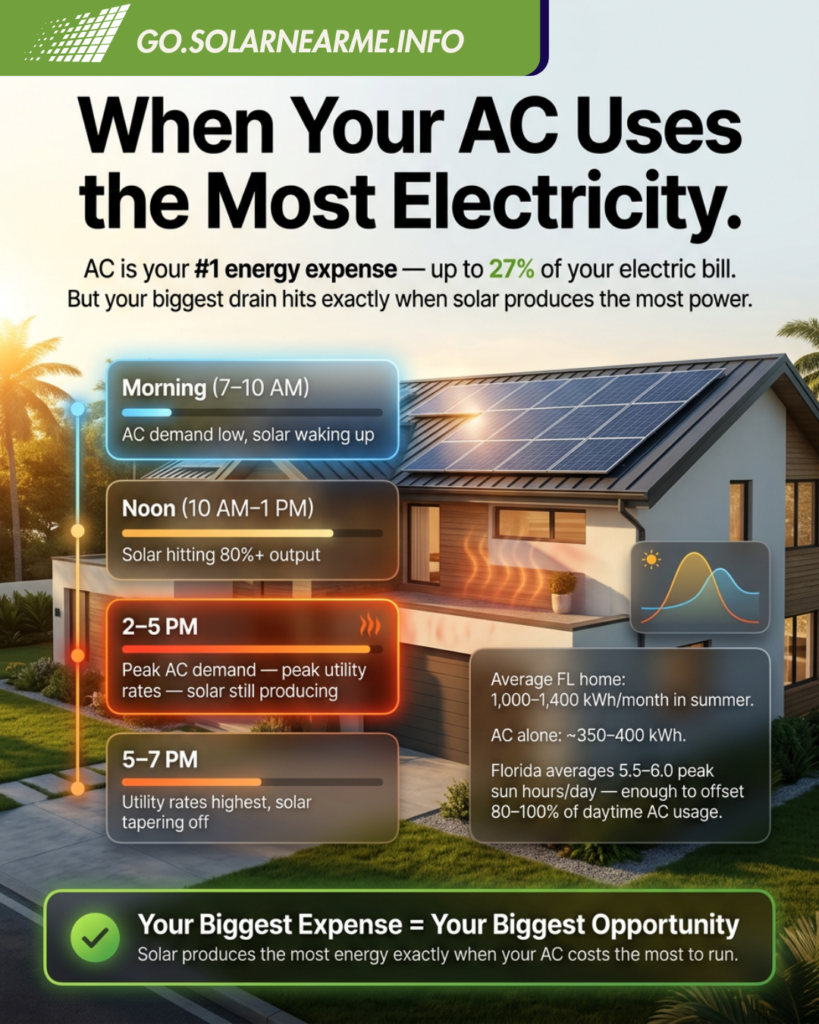
The good news? It also uses the most electricity during the exact hours solar panels generate the most power.
That’s why many Florida homeowners install solar specifically to offset cooling costs.
How Do Solar Panels Offset Air Conditioning Costs in Florida?
Your air conditioner uses the most electricity during hot, sunny afternoons the exact same time your solar panels generate the most power. Instead of buying that expensive electricity from your utility company, your solar system powers your home first, reducing the amount of electricity you need to purchase.
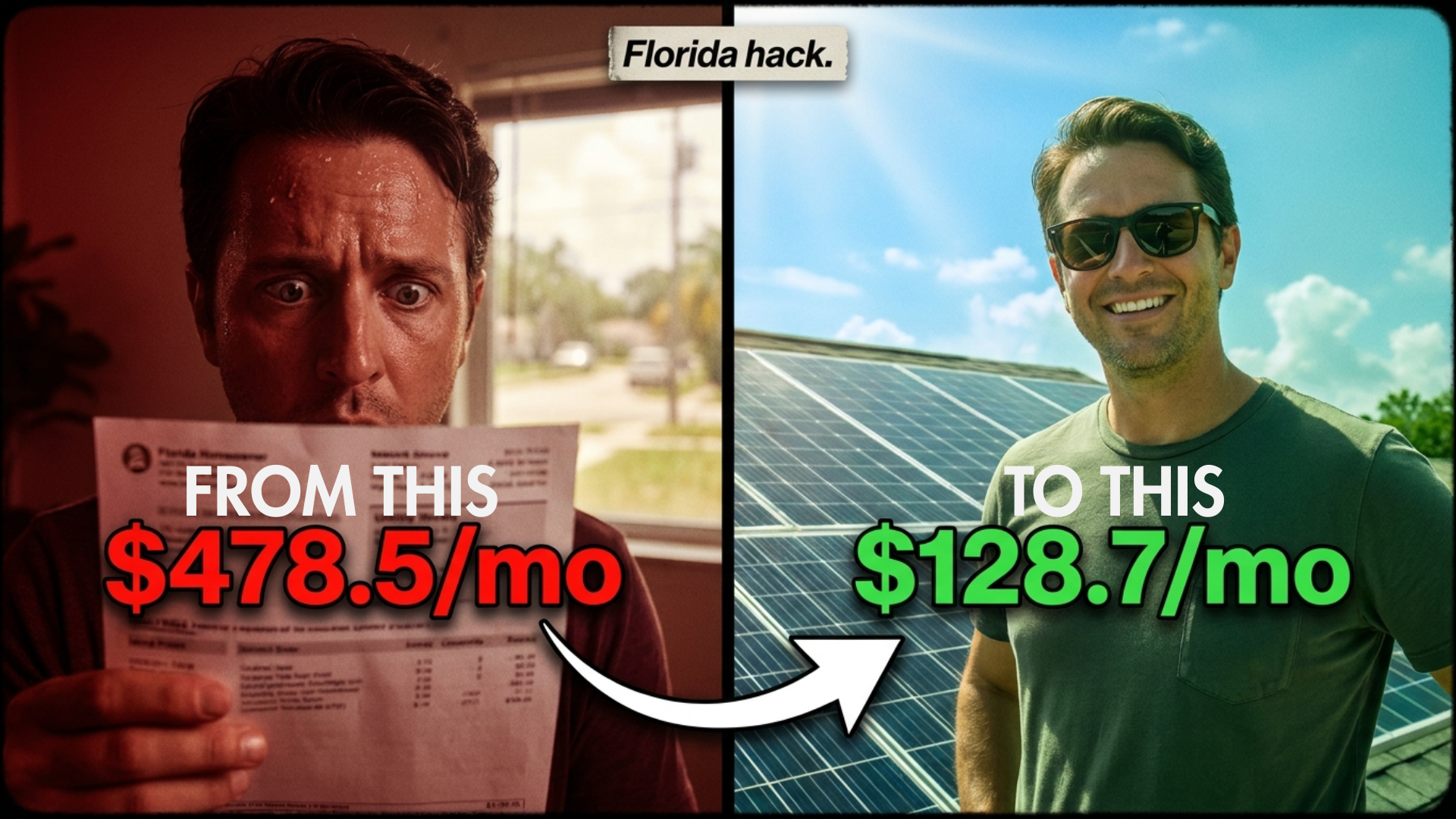
For many homeowners, this means lower cooling costs during the months when electric bills are typically the highest.
How Much Can Solar Lower Your Summer Electric Bill?
Every home is different, but the right solar system can offset a significant portion of your cooling costs.
Your savings depend on factors like:
- Your monthly electricity usage
- The size of your solar system
- Your air conditioner’s efficiency
- Your local utility rates
- How much sunlight your roof receives
Example Savings
| Monthly Electric Bill | Estimated AC Portion | Potential Solar Offset* | Homeowner Type |
|---|---|---|---|
| $150 | $60–$90 | High | Smaller Home |
| $250 | $100–$150 | High | Average Family |
| $400 | $160–$240 | Very High | Large Home / Pool |
*Actual savings vary based on system size, roof conditions, weather, and utility policies.
Did You Know?
Your air conditioner uses the most electricity during the exact same hours your solar panels produce the most electricity. That’s one of the biggest reasons Florida is one of the best states for residential solar.
How Much Electricity Does an Air Conditioner Use?
Air conditioners are one of the most energy-intensive appliances in any Florida home. The amount of electricity they use depends on the system’s size, age, and efficiency.
| Air Conditioner Type | Typical Power Use | Solar Compatibility |
|---|---|---|
| Window Unit | Low | Excellent |
| Mini-Split Heat Pump | Low – Moderate | Excellent |
| Central AC | High | Excellent |
| Large Multi-Zone | Very High | Excellent with larger system |
According to the U.S. Department of Energy, air conditioning accounts for about 12% of residential electricity use nationwide. In hot climates like Florida, however, cooling can represent 40–60% of a home’s summer electricity bill, making it one of the best uses for rooftop solar.
Replacing an older HVAC system with a high-efficiency model can reduce energy consumption, allowing your solar system to offset an even greater share of your cooling costs.
How Many Solar Panels Do You Need to Offset Air Conditioning Costs?
There isn’t a one-size-fits-all answer. The number of panels depends on:
- AC size and runtime
- Solar panel wattage
- Roof orientation
- Available sunlight
- Shade
- Panel efficiency
- Household usage
- Pool
- EV
- Future additions
For many Florida homes, offsetting a central air conditioner may require approximately 15–20 modern 400-watt solar panels, although every home’s energy needs are unique.
Can Solar Offset Air Conditioning Costs at Night?
Yes—but not directly from the solar panels.
Solar panels only produce electricity while the sun is shining. At night, your air conditioner can continue running by using one of two options:
Grid-Tied Solar
Most Florida homes remain connected to the electric grid. During the day, your solar panels generate electricity that powers your home, and any excess energy may be credited through your utility’s net billing or compensation program. At night, your home draws electricity from the grid.
Solar Battery Storage
Adding a home battery allows you to store excess solar energy generated during the day and use it after sunset. This can help power your air conditioner overnight and provide backup electricity during power outages a valuable benefit during Florida’s hurricane season.
What Affects How Much Solar Can Save on Cooling Costs?
Not every Florida home will save the same amount with solar. Your total savings depend on several important factors.
The biggest factors include:
- Your air conditioner’s efficiency – Newer ENERGY STAR® systems use less electricity than older units.
- Your roof’s orientation – South- and west-facing roofs typically receive the most sunlight.
- Shade from trees or nearby buildings – More shade means lower solar production.
- Your household’s energy usage – Homes with higher daytime electricity use often benefit the most.
- Your local utility rates – Higher electricity prices generally increase potential savings.
A professional solar assessment considers all of these factors not just your current electric bill. If you’re planning to buy an electric vehicle, replace your air conditioner, add a pool, or spend more time working from home, those future energy needs should also be included when designing your system.
Are There Any Downsides to Running Air Conditioning on Solar?
Solar can dramatically reduce cooling costs, but it’s important to understand a few considerations.
- A larger AC load typically requires a larger solar system.
- Battery storage increases upfront installation costs.
- Homes with significant roof shading may produce less solar energy.
- Older, inefficient air conditioners may use more electricity than necessary.
Avoid This Mistake: Don’t size your solar system based only on your current electric bill. If you plan to replace your air conditioner, purchase an electric vehicle, or add a pool, those future energy needs should be included in your system design.
Is Solar Worth It If Air Conditioning Is Your Biggest Electric Expense?
For many Florida homeowners, the answer is yes.
Solar panels produce the most electricity during sunny afternoons precisely when your air conditioner is working hardest. That natural alignment allows homeowners to offset one of the largest contributors to their monthly utility bill while reducing reliance on traditional electricity.
Combined with today’s high-efficiency solar panels, smart inverters, and optional battery storage, solar has become one of the most effective ways to manage rising cooling costs without sacrificing comfort.
Explore Solar Options for Your Air Conditioning Needs in Florida
If high air conditioning bills are driving up your monthly electricity costs, solar may be one of the smartest investments you can make. At Solar Near Me, we help homeowners across Orlando, Tampa, Lakeland, Polk County, Orange County, Hillsborough County, and throughout Florida compare top-rated solar installers, understand their financing options, and choose the right system for their home’s cooling needs.
Curious How Much of Your Cooling Costs Solar Could Offset? Our goal is to help you maximize savings while ensuring your solar system is properly sized to offset your home’s air conditioning and overall electricity usage.
We’ll review:
✔ Your electric bills
✔ Your AC usage
✔ Your roof
✔ Existing solar quotes
✔ Future energy plans
No pressure. Just honest advice.
Curious How Much of Your Cooling Costs Solar Could Offset?
Frequently Asked Questions
How much can solar panels reduce air conditioning costs in Florida?
A properly sized solar system can offset a significant portion of the electricity used to cool your home. Because solar panels generate the most power during sunny afternoons—when air conditioners run the most many Florida homeowners see meaningful savings on their summer electric bills. Your actual savings depend on your energy usage, system size, roof conditions, and utility rates.
Do solar panels work well during Florida’s hottest months?
Yes. While extremely high temperatures can slightly reduce solar panel efficiency, Florida’s long days and abundant sunshine allow solar systems to produce plenty of electricity during the summer. In fact, peak solar production often aligns with peak air conditioning demand, making solar especially effective for reducing cooling costs.
How long can an air conditioner run on solar power?
During the day, your air conditioner can run as long as your solar panels are generating enough electricity. At night, your AC can continue running using electricity from the utility grid or from a home battery system if one is installed.
How many solar panels do I need to offset my air conditioning costs?
The number of panels depends on your home’s total electricity usage, the size and efficiency of your air conditioner, roof orientation, and available sunlight. Many Florida homes require approximately 15 to 20 modern 400-watt solar panels to offset the electricity used by a typical central air conditioning system.
Can I run an air conditioner on solar without a battery?
Yes. Most residential solar systems do not require batteries. During the day, your solar panels power your home while the utility grid supplies additional electricity if needed. Batteries are optional and are primarily used for nighttime operation and backup power during outages.
Is a solar-powered air conditioner worth it in Florida?
For many homeowners, yes. Florida’s long cooling season and abundant sunshine make solar an excellent way to offset one of the largest household energy expenses. Many homeowners install solar specifically to reduce summer air conditioning costs.
What are the downsides of using solar to power an air conditioner?
The biggest considerations are the upfront investment, roof space requirements, and ensuring your solar system is properly sized for your home’s energy needs. Homes with older, less efficient air conditioners may also benefit from upgrading their HVAC system before going solar.
Can a solar battery run an air conditioner?
Yes. A home battery stores excess solar energy produced during the day so it can power your air conditioner after sunset or during a power outage. Runtime depends on the battery’s capacity, your AC size, and how much electricity your home uses.
Will solar completely eliminate my electric bill?
Not always. Your savings depend on your solar system size, household electricity use, local utility rates, and weather conditions. Many Florida homeowners significantly reduce their electric bills, while some produce enough solar energy to offset nearly all of their annual electricity usage.
Is solar worth it if my air conditioner causes most of my electric bill?
Absolutely. Air conditioning is often the largest energy expense for Florida homeowners. Because solar panels generate the most electricity during sunny afternoons when your AC is working hardest, they’re one of the most effective ways to reduce cooling costs.
Should I Replace My Air Conditioner Before Installing Solar?
It depends. If your current air conditioner is nearing the end of its lifespan or is significantly less efficient than newer models, replacing it before sizing your solar system may allow for a smaller, more cost-effective installation. A professional assessment can help determine the best order for your home improvements.