

Thinking about going solar? Don’t sign a contract until you’ve asked these 11 questions. Installing solar is one of the biggest home improvement decisions you’ll ever make. The right system can lower your electric bills for decades. The wrong one can leave you paying more than expected, dealing with poor system performance, or regretting a long-term contract. Before you choose an installer, these are the questions every Florida homeowner should ask.
11 Questions Every Florida Homeowner Should Ask Before Going Solar
Before going solar, every Florida homeowner should ask:
- Is My Home Actually a Good Candidate for Solar?
- How Much Electricity Does My Home Really Use?
- How Big Should My Solar System Be?
- What Equipment Is Being Recommended?
- What Warranties Are Included?
- What Financing Options Are Available?
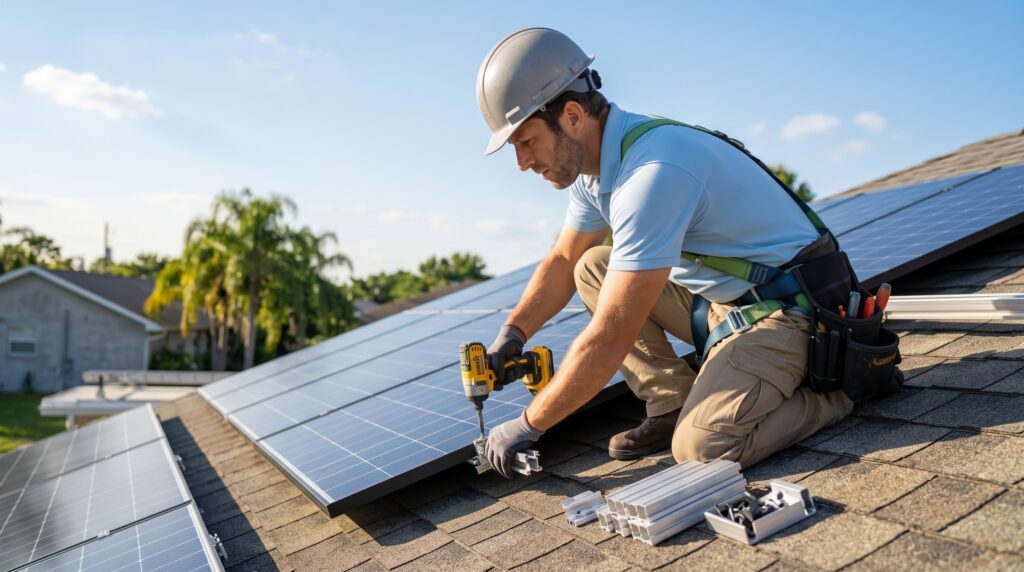
- Who Will Actually Install My Solar System?
- What Happens If I Sell My Home?
- What If My Roof Needs Replacing?
- What Happens After Installation?
- How Do I Know I’m Choosing the Right Solar Company?
A well-designed solar system can help lower electricity costs, provide more predictable monthly expenses, and reduce dependence on rising utility rates for years to come. But not every solar proposal delivers the same value. Two companies can recommend completely different system sizes, equipment, financing options, and projected savings even when the monthly payment appears almost identical.
That’s why asking the right questions before signing a contract is so important. Rather than focusing only on price, homeowners should understand exactly what they’re buying, how the system is designed, and whether it truly fits their home’s energy needs.
In this guide, we’ll walk through 11 Questions Every Florida Homeowner Should Ask Before Going Solar, explain why each one matters, and help you make a confident, informed decision.
At Solar Near Me, we believe education comes before sales. We compare multiple installers, equipment options, financing solutions, and existing proposals so homeowners receive recommendations based on their actual energy needs not sales quotas.
Why Asking the Right Questions Matters
Solar contracts often last 20 to 25 years. That’s much longer than buying a new appliance or replacing an air conditioner. Unfortunately, many homeowners feel pressured to make a decision after only one consultation.
Some companies focus heavily on monthly payments while spending very little time explaining:
- How the system was designed.
- Why a certain number of panels was recommended.
- How much electricity the system is expected to produce.
- What assumptions were used to calculate savings.
Understanding these details before signing can help prevent surprises later. The goal isn’t simply to install solar. The goal is to install the right solar system. Here are 11 Questions Every Florida Homeowner Should Ask Before Going Solar.
1. Is My Home Actually a Good Candidate for Solar?
This should always be the first question. Solar performs best when several factors come together.
A good solar candidate typically has:
- A roof with strong sun exposure.
- Minimal shading from nearby trees or buildings.
- A roof that’s in good condition.
- Moderate to high electricity usage.
- Plans to remain in the home for several years.
Florida is one of the best states in the country for solar thanks to its abundant sunshine, but even here, every home is different. A roof covered by mature trees may produce significantly less electricity than an identical home with full sun exposure. Likewise, homeowners with very low electric bills may see less financial benefit than households with higher monthly usage.
A professional solar assessment should evaluate your home’s unique characteristics before recommending any system.
Did You Know? Florida averages more than 230 sunny days each year, making it one of the strongest states in the U.S. for residential solar production.
2. How Much Electricity Does My Home Really Use?
Many homeowners are surprised to learn that their electric bill isn’t the most important number. Your actual electricity usage is. Solar systems are designed based on the amount of electricity your home consumes over an entire year not simply your highest or lowest monthly bill.
That’s why reputable companies often request your previous 12 months of utility bills before preparing a proposal.
Looking at annual usage helps account for:
- Seasonal changes.
- Summer cooling demand.
- Winter usage.
- Lifestyle changes throughout the year.
Designing a system based on only one month’s bill can lead to an oversized or undersized installation. The goal is to match production as closely as possible to your long-term energy needs.
Pro Tip: Always ask whether your proposal is based on your last 12 months of electricity usage or simply an estimate. A properly designed system should reflect how your household actually uses energy.
3. How Big Should My Solar System Be?
One of the biggest mistakes homeowners make is assuming that bigger automatically means better. It doesn’t.
The right system size depends on several factors, including:
- Annual electricity consumption.
- Roof space.
- Available sunlight.
- Future energy needs.
- Local utility policies.
An oversized system may cost more than necessary. An undersized system may not generate enough electricity to meaningfully reduce your utility bill. The goal is balance.
A good proposal should clearly explain:
- Estimated annual electricity production.
- Expected system efficiency.
- Assumptions used during system design.
- Whether future changes such as adding an electric vehicle or pool were considered.
Understanding why a particular system size was recommended is just as important as understanding its cost.
4. What Equipment Is Being Recommended?
Not all solar panels and inverters are the same.
While many systems look similar from the ground, there can be important differences in:
- Panel efficiency – Determines how much electricity can be produced from available roof space.
- Performance in hot weather – Affects how much power your panels lose on Florida’s hottest, sunniest days.
- Manufacturer reputation – Indicates long-term reliability and support.
- Product warranties – Protects your investment over time.
- Inverter technology – Determines how efficiently your system converts sunlight into usable electricity.
- Long-term reliability – Reflects how well the equipment holds up over 20–25 years of Florida heat and storms.
Rather than asking for the “best” equipment, ask why a particular product was recommended for your home.
A trustworthy installer should explain:
- Panel Selection – Why those specific panels were chosen for your roof.
- Premium vs. Standard – Whether upgraded equipment is actually necessary for your situation.
- Expected Performance – How much electricity the system should realistically produce.
- Warranty Coverage – What’s protected, for how long, and by whom. Battery Compatibility – Whether the equipment supports adding storage later if you decide to.
The most expensive equipment isn’t always the best choice. The best equipment is the one that matches your home’s needs and budget.
5. What Warranties Are Included?
Ask about three different types of protection:
Product Warranty
Covers defects in the solar panels and equipment.
Performance Warranty
Explains how much electricity the panels are expected to produce over time.
Workmanship Warranty
Protects against installation-related issues after the system is installed. Understanding who is responsible for each warranty and how claims are handled can provide valuable peace of mind before signing a contract. A reputable company should clearly explain what’s covered, how long coverage lasts, and who to contact if you ever need support.
6. What Financing Options Are Available?
One of the biggest concerns homeowners have is cost. Fortunately, paying for solar isn’t a one-size-fits-all decision. Today’s homeowners can choose from several financing options depending on their budget and long-term goals.
The most common options include:
Paying Cash
Paying upfront usually provides the greatest long-term savings because there are no monthly financing costs. It’s often the preferred option for homeowners who want the highest overall return on investment.
Solar Loan
Many homeowners choose a loan that spreads the cost over several years. Depending on your electricity usage and financing terms, your monthly loan payment may be comparable to or in some cases lower than your current electric bill. A loan also allows many homeowners to begin saving on electricity without making a large upfront payment.
Solar Subscription or Other Payment Programs
Some homeowners prefer programs that reduce or eliminate the large upfront investment while providing more predictable monthly energy costs. The right financing option depends on your financial goals, expected energy savings, and how long you plan to stay in your home.
Questions to Ask About Financing
Before signing, ask:
- What financing options are available?
- Is there a prepayment penalty?
- Can I pay the loan off early?
- How much will I pay over the life of the agreement?
- What happens if I sell my home?
Understanding these details now can prevent surprises later.

7. Who Will Actually Install My Solar System?
Many homeowners assume the company giving the sales presentation is also installing the system. That’s not always the case. Some companies use subcontractors, while others have their own installation teams. Neither approach is automatically better, but you should know who will be working on your home.
Ask questions like:
- Who performs the installation?
- Are they licensed and insured?
- How much experience do they have?
- Who handles permits and inspections?
- Who do I contact if there’s a problem after installation?
A reputable company should have no hesitation answering these questions.
8. What Happens If I Sell My Home?
Life changes. You may not stay in your current home forever. That’s why it’s important to understand how your solar system could affect a future home sale.
Questions worth asking include:
- Will the system transfer to the next homeowner?
- Does the financing transfer?
- Is there a payoff amount?
- Will the solar system increase the home’s appeal to buyers?
- Are there any transfer fees?
Knowing the answers ahead of time helps you make a more informed long-term decision.
9. What If My Roof Needs Replacing?
Solar panels often remain on a home for 25 years or more. If your roof is already nearing the end of its lifespan, replacing it before installing solar may save significant time and money later.
Ask your installer:
- How old should my roof be before installing solar?
- Will my roof likely need replacing during the life of the system?
- What happens if roof repairs become necessary later?
A quality solar assessment should evaluate your roof not just your electricity bill.
Did You Know? Installing solar on a roof that needs replacement within a few years can increase future costs because the panels may need to be removed and reinstalled during roofing work. Planning ahead can help avoid unnecessary expenses.
10. What Happens After Installation?
Installing solar isn’t the end of the process. It’s the beginning. Before signing a contract, understand what happens after your system is installed.
Ask questions such as:
- Who monitors system performance?
- How do I know the system is producing electricity?
- What happens if production drops?
- Who handles warranty claims?
- Is ongoing customer support available?
A company should continue supporting homeowners long after installation day.
11. How Do I Know I’m Choosing the Right Solar Company?
Perhaps the most important question isn’t about solar panels. It’s about the company recommending them. Instead of focusing only on price, evaluate whether the company is taking time to understand your home. Use this checklist during your consultation score each company as you go.
Solar Company Scorecard
| Question | Yes | No |
| Did they review your last 12 months of electricity usage? | ||
| Did they explain how your system size was chosen? | ||
| Did they explain why specific equipment was recommended? | ||
| Did they clearly walk you through financing options? | ||
| Did they answer your questions without pressuring you to sign? | ||
| Did they give realistic not exaggerated production estimates? | ||
| Did they explain warranties and long-term support? |
If a company scores mostly “No,” that’s a warning sign, not a coincidence. A quality solar company should earn your trust through education, not urgency.
Ready to See What Solar Can Save You?

Red Flags to Watch For
Not every solar proposal is created with the homeowner’s best interests in mind.
Be cautious if a company:
- Promises “free solar” without explaining the agreement.
- Guarantees your electric bill will disappear.
- Says “today only”.
- Doesn’t review annual usage.
- Rushes you to sign before you’ve compared quotes.
- Won’t review your previous electricity usage.
- Refuses to explain how the system was sized.
- Guarantees unrealistic savings.
- Pressures you to sign immediately.
- Doesn’t explain financing terms clearly.
- Avoids discussing warranties or maintenance.
A good proposal should leave you feeling informed not rushed.
Common Mistakes Homeowners Make
Many homeowners unknowingly make avoidable mistakes when choosing solar.
Some of the most common include:
- Choosing the lowest price without comparing equipment.
- Looking only at the monthly payment.
- Skipping a roof inspection.
- Not reviewing annual electricity usage.
- Accepting the first proposal they receive.
- Assuming every installer offers the same products and warranties.
Taking time to compare multiple proposals often leads to a better long-term investment. It’s also important to understand how to avoid common solar scams in Florida, especially if you’re receiving multiple sales calls or high-pressure offers.
Wondering If You’re Ready for Solar?
Before you commit to a system, we’ll review:
✔ Your last 12 months of electric bills
✔ Your roof’s condition and sun exposure
✔ Your utility provider
✔ Available financing options
✔ Existing solar proposals
✔ Estimated long-term savings
You’ll receive honest, independent guidance designed to help you make the right decision not the fastest one.
No pressure. No obligation. Just straightforward advice from an independent Florida solar brokerage.
Schedule Your Free Solar Consultation
Ready to See What Solar Can Save You?
Frequently Asked Questions
Before installing solar panels, make sure your home is a good fit for solar, understand your average electricity usage, compare more than one quote, and choose a licensed, reputable installer. It’s also important to review warranties, financing options, and available Florida solar incentives so you know exactly what you’re paying for.
Look for a company that takes the time to understand your home’s energy needs instead of offering a one-size-fits-all solution. Ask about licensing, warranties, installation experience, financing options, and ongoing support after your system is installed. Comparing multiple quotes can also help you make a more informed decision.
Ask how the system was designed, what assumptions were used to estimate savings, what equipment is included, who performs the installation, what warranties apply, and what financing options are available.
Not necessarily.
The best system is the one that’s properly designed for your home’s energy usage, roof, and budget not simply the most expensive option.
Homes with good sun exposure, moderate to high electricity usage, and roofs in good condition are often strong candidates for solar. A professional assessment can determine whether your home is a good fit.
Before You Sign Any Solar Contract
The questions you ask today can affect your electricity costs for the next 20 to 25 years.
Take your time. Compare proposals.
Understand the numbers. Review the warranties.
Choose a company that’s willing to educate not pressure you.
If you’d like an independent review of your solar proposal, Solar Near Me will help you compare your options and determine what truly makes sense for your home.
No pressure. Just honest guidance.
Ready to Find Out If Solar Is Right for Your Home?
Schedule your free consultation today and let our independent team review your energy usage, compare your options, and help you make the decision that’s best for your home not someone else’s sales target.
Contact Solar Near Me for a free Solar Consultation