
If you have solar panels, you’ve probably wondered whether they need to be cleaned and if so, how often.
Florida’s rain washes away some dirt, but pollen, bird droppings, leaves, and salt air can still build up over time.
The good news? Most homeowners don’t need expensive equipment or frequent cleanings. Here’s how to safely clean solar panels without damaging them.
How to clean solar panels: Follow the manufacturer’s instructions, avoid abrasive materials and harsh chemicals, and never put yourself at risk climbing onto a roof. For many homeowners, loose dirt can be rinsed away with water, while heavier buildup may require a soft brush or microfiber cloth. Florida homeowners may need to pay particular attention to pollen, dust, bird droppings, leaves, salt air and other debris that can accumulate on panels
Do Solar Panels Need to Be Cleaned?
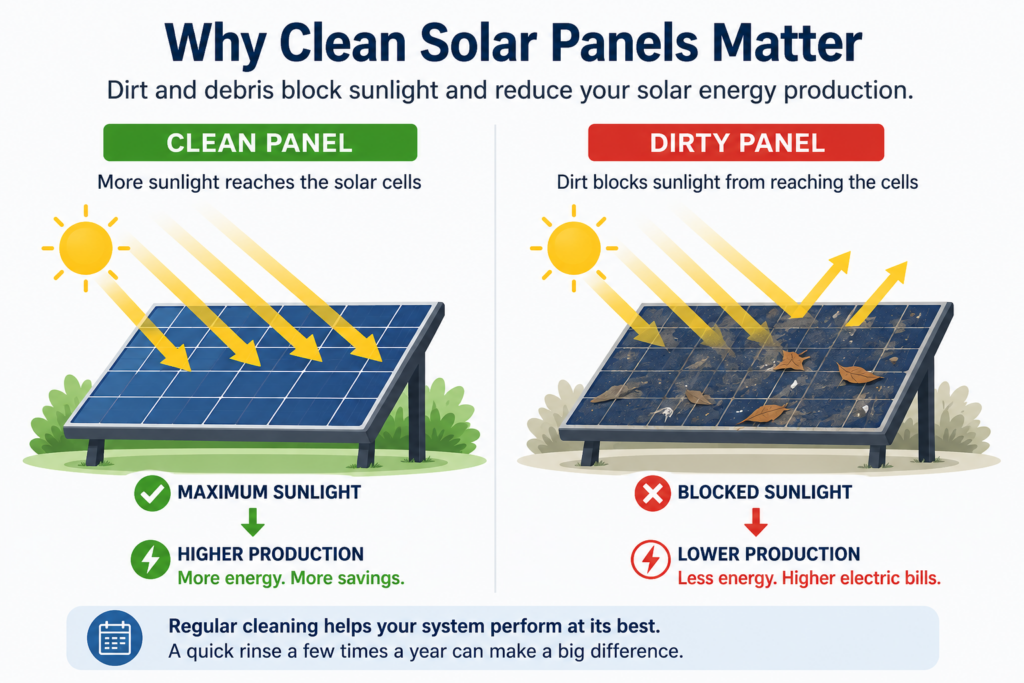
Sometimes. Solar panels can collect dust, pollen, leaves, bird droppings and other debris that may reduce the amount of sunlight reaching the photovoltaic cells. However, not every solar panel system needs frequent manual cleaning.
Rain naturally washes away some dirt, particularly on panels installed at an angle.
Whether you need to clean your panels depends on several factors:
- How much rain your area receives
- The angle of your roof
- Nearby trees
- Dust and pollen levels
- Bird activity
- Coastal salt exposure
- Construction or road dust
- How much debris accumulates on the panels
- Whether the buildup is actually affecting solar production
For homeowners in Florida, regular rain can help keep panels relatively clean. But rain doesn’t necessarily remove everything.
Bird droppings, oak pollen, leaves, hurricane debris, coastal salt spray, and lovebug residue can remain on the surface even after heavy rainfall.
How Often Should You Clean Solar Panels?
There isn’t one cleaning schedule that works for every home.
For many homeowners, checking the panels every few months and cleaning them when visible buildup appears is a reasonable approach.
You may need to clean more frequently if your home:
- Is surrounded by trees
- Has significant bird activity
- Is near construction
- Experiences heavy pollen
- Is close to the coast
- Has panels with noticeable dirt buildup
- Has experienced a storm that leaves debris behind
You should also pay attention to your system’s energy production.
If your monitoring app shows that your solar production has unexpectedly declined and there isn’t an obvious weather-related explanation, dirty panels could be one thing worth checking.
Most solar panels lose very little performance from ordinary dust. Heavy pollen, bird droppings, or leaves are much more likely to noticeably reduce production.
Don’t clean panels just because the calendar says so.
The goal isn’t to make your panels look shiny.
The goal is to keep them producing electricity safely and effectively.
How to Clean Solar Panels Step by Step
If your panels are safely accessible from the ground or another secure location, cleaning them is usually a straightforward process.
Step 1: Check the Manufacturer’s Instructions
Before cleaning your panels, check the manufacturer’s recommendations.
Different solar panels and systems can have different requirements regarding:
- Cleaning products
- Water
- Brushes
- System shutdown
- Maintenance
- Warranty requirements
If you’re unsure, check your owner’s manual or contact your solar installer.
Step 2: Choose the Right Time
Avoid cleaning solar panels when they are extremely hot.
Early morning or later in the day is generally more practical because the panels are cooler.
Why does that matter?
Cold water hitting very hot glass can create thermal stress, and water can evaporate quickly from a hot panel, potentially leaving mineral deposits behind.
Step 3: Turn Off the System if Required
Before doing anything involving the electrical equipment, follow the shutdown instructions provided by your manufacturer or installer.
Never open electrical equipment or disconnect wiring yourself simply to clean the panels.
Step 4: Remove Loose Debris
Look for:
- Leaves
- Twigs
- Large dirt particles
- Bird droppings
- Other debris
If debris can be safely removed from the ground, use an appropriate soft cleaning tool.
Don’t scrape the panel with anything sharp.
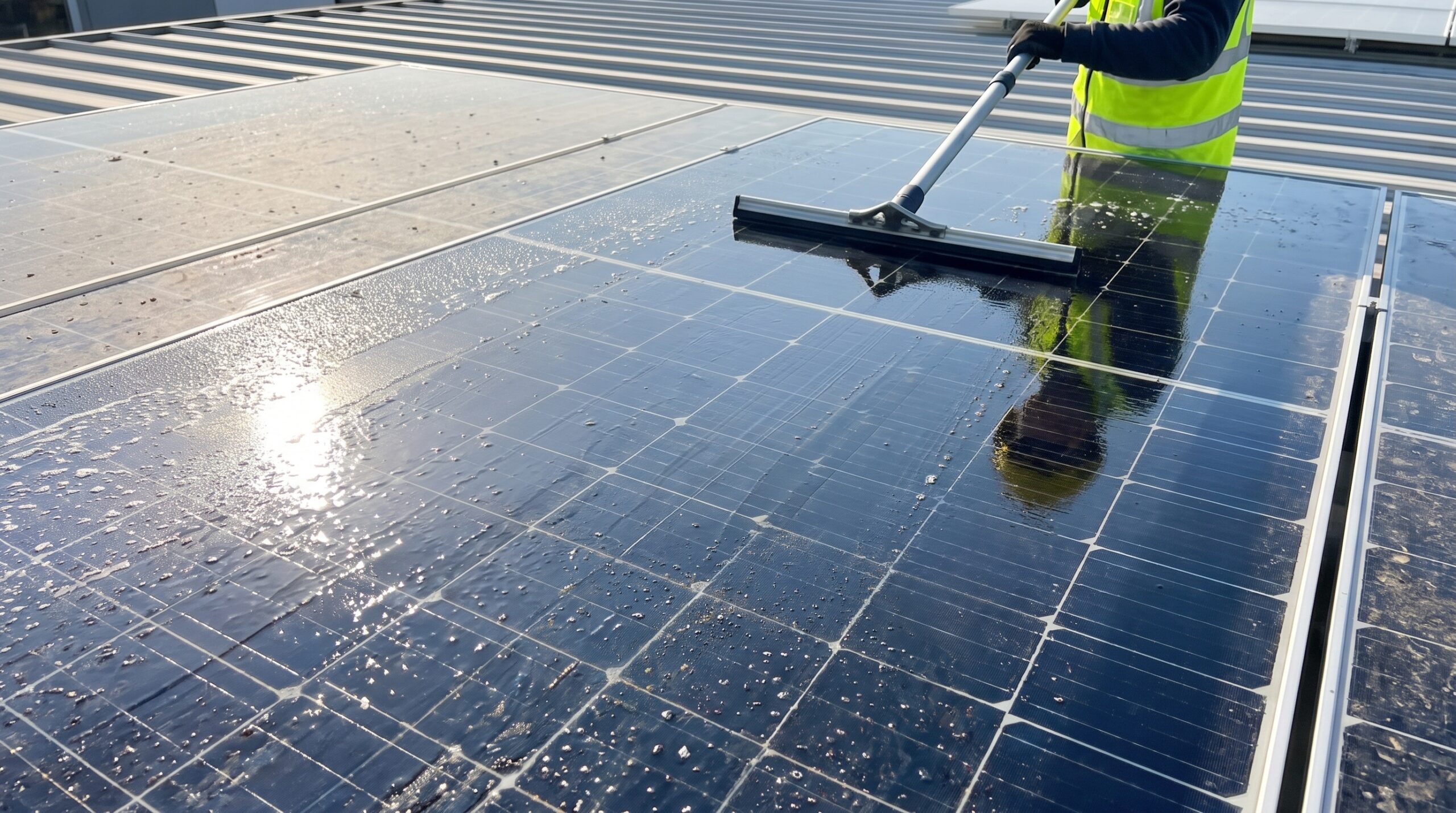
Step 5: Rinse the Panels
Use clean water to rinse loose dirt and dust from the surface.
A regular garden hose can be sufficient for light buildup.
The objective is to loosen the dirt before wiping the panel.
Step 6: Gently Clean Stubborn Dirt
For more persistent buildup, use a soft, non-abrasive brush or microfiber cloth.
Avoid aggressive scrubbing.
Solar panels have protective surface coatings and glass designed to withstand normal outdoor conditions, but that doesn’t mean they’re immune to scratching or damage from improper cleaning.
Step 7: Rinse Again
After cleaning, rinse the panels thoroughly.
You want to remove any remaining dirt or cleaning residue.
If your local water supply contains a high concentration of minerals, allowing tap water to dry on the panels may leave spots or deposits.
Step 8: Let Them Dry
In many situations, you can simply allow the panels to air dry.
If your manufacturer recommends drying the panels, follow those instructions.
Do You Need to Turn Off Solar Panels Before Cleaning?
You should follow your solar panel manufacturer’s and installer’s shutdown instructions before cleaning. Do not assume that simply turning off a switch makes every part of a solar system electrically safe.
Solar panels produce electricity whenever they receive sunlight.
That’s why homeowners shouldn’t disconnect wiring, open electrical components or attempt electrical repairs as part of routine cleaning.
If you’re unsure how your system should be shut down:
Don’t guess. Contact your installer or a qualified solar professional.
For routine cleaning, there is usually no reason for a homeowner to interact with the system’s electrical wiring.
How Do You Clean Solar Panels Without Damaging Them?
The safest approach is to keep the cleaning process gentle and simple.
Do:
- Follow the manufacturer’s instructions
- Use clean water
- Use a soft brush
- Use a microfiber cloth when appropriate
- Clean when panels aren’t extremely hot
- Rinse thoroughly
- Stay off the roof whenever possible
Don’t:
- Use abrasive brushes
- Scrape the glass
- Use harsh chemicals
- Use sharp objects
- Walk on solar panels
- Spray electrical components
- Open electrical equipment
- Pressure wash without manufacturer approval
- Climb onto a roof without proper safety equipment
The biggest mistake isn’t necessarily using the wrong soap.
It’s putting yourself at risk to clean something that may not need to be cleaned that often.
| Cleaning Method | Safe | Recommended |
|---|---|---|
| Garden hose | ✅ | Yes |
| Soft microfiber cloth | ✅ | Yes |
| Soft brush | ✅ | Yes |
| Pressure washer | ❌ | Usually No |
| Abrasive scrubber | ❌ | Never |
Can You Clean Solar Panels by Yourself?
Yes, many homeowners can clean their solar panels themselves if the panels are safely accessible.
DIY cleaning makes the most sense when:
- The panels can be reached from the ground
- Your roof is low and safely accessible
- There is minimal buildup
- You have the appropriate equipment
- You can follow the manufacturer’s instructions
However, you don’t need to climb onto your roof just because your panels are dirty.
If your panels are installed on a steep or high roof, professional cleaning may be the better option.
The money you save cleaning the panels yourself isn’t worth a fall or injury.
What Is the Best Thing to Use to Clean Solar Panels?
| Item | Can Use to Clean |
|---|---|
| Garden Hose | Yes |
| Soft Sponge | Yes |
| Microfiber Cloth | Yes |
| Rain Water | Sometimes |
| Pressure Washer | No |
| Wire Brush | No |
| Bleach | No |
| Walk on Panels | No |
For ordinary dirt and dust, clean water and a soft, non-abrasive cleaning tool are usually the safest starting point.
Depending on the manufacturer’s instructions, you may use:
- A garden hose
- Soft-bristle brush
- Microfiber cloth
- Telescoping soft brush
- Manufacturer-approved cleaning solution
Avoid abrasive materials that could scratch the glass.
And before using household cleaners, check the manufacturer’s recommendations.
More cleaning product doesn’t mean cleaner or better-performing panels.
How Do You Clean Solar Panels From the Ground?
Cleaning from the ground is one of the safest options for homeowners.
You can use a telescoping soft brush designed for solar panels or a similar non-abrasive tool that allows you to reach the panels without climbing onto the roof.
A basic process is:
- Rinse the panels with clean water.
- Use a soft telescoping brush for stubborn dirt.
- Gently move the brush across the surface.
- Rinse away loosened debris.
- Allow the panels to dry.
If you cannot reach the panels safely from the ground, don’t improvise with ladders or roof climbing.
Call a professional instead.
Can You Use a Pressure Washer on Solar Panels?
Generally, you should avoid pressure washing solar panels unless the manufacturer specifically approves it.
High-pressure water can potentially damage:
- Seals
- Frames
- Electrical connections
- Protective components
You don’t need high pressure to remove ordinary dust and dirt.
A normal garden hose with gentle water pressure is often a much safer approach.
Can You Use Dish Soap to Clean Solar Panels?
This is one of those questions where following your manufacturer’s instructions matters more than a universal rule.
Some solar cleaning guidance allows mild soap, while other recommendations suggest using plain water to avoid residue or streaking.
If you do use a cleaning solution, make sure it is compatible with your particular panels.
When you’re unsure:
Use clean water and a soft, non-abrasive tool rather than experimenting with household chemicals.
Can Rain Clean Solar Panels?
Yes, rain can remove some dust and dirt from solar panels, but it doesn’t necessarily remove everything.
Rain is one reason many homeowners don’t need to manually clean their panels very often.
However, rain may not completely remove:
- Bird droppings
- Sticky pollen
- Leaves
- Tree sap
- Heavy dust
- Salt deposits
- Dried mineral deposits
Florida’s frequent rainfall can help, but homeowners should still inspect their panels periodically.
Tips on How to Clean Solar Panels in Florida
Florida presents some unique conditions for solar panels.
1. Watch for Oak Pollen
Florida’s vegetation can produce significant amounts of pollen.
A layer of pollen can accumulate on panel surfaces and mix with moisture to create residue.
2. Keep an Eye on Bird Droppings
A small amount of dust may not make much difference.
A large bird dropping covering part of a panel is different.
Localized obstructions can prevent sunlight from reaching portions of the panel.
3. Check After Severe Weather
Florida storms can leave:
- Leaves
- Branches
- Dirt
- Other debris
on your roof and solar panels.
After major storms, inspect the system visually from a safe location.
Don’t climb onto the roof to inspect storm damage.
4. Coastal Homes May Need More Attention
If you live near Florida’s coast, salt and airborne particles can accumulate on outdoor surfaces.
That can make occasional inspection more important.
5. Don’t Clean During the Hottest Part of the Day
Florida’s sun can make panels extremely hot.
Cleaning early in the morning or later in the day can make the process safer and more effective.
When Should You Hire a Professional?
Professional cleaning is a better option when:
- Your roof is steep
- Your panels are difficult to access
- You need a ladder to reach the panels
- You aren’t comfortable working at height
- The panels have heavy buildup
- There is storm damage
- You suspect a panel or electrical problem
- You cannot safely reach the panels from the ground
Remember:
Solar panel cleaning is optional. Roof safety isn’t.
If cleaning requires you to climb onto a dangerous roof, hire someone who has the proper equipment and experience.
Does Cleaning Solar Panels Increase Their Efficiency?
Cleaning can improve solar production when dirt or debris is blocking sunlight, but the impact depends heavily on how dirty the panels were to begin with.
A lightly dusty panel may see little noticeable improvement.
A panel covered with bird droppings, leaves or significant debris can be a different story.
That’s why it’s better to think about cleaning as maintenance that helps prevent unnecessary losses, rather than assuming every cleaning will dramatically increase your electricity production.
Your solar monitoring system can help you identify whether production changes after cleaning.
Solar Panel Cleaning FAQ
How often should you clean solar panels?
There is no universal schedule. Many homeowners can simply inspect their panels periodically and clean them when noticeable dirt, bird droppings, pollen or debris accumulates.
Can you clean solar panels yourself?
Yes. DIY cleaning is possible when panels are safely accessible. Avoid climbing onto steep or high roofs simply to clean them.
What is the best thing to use to clean solar panels?
Clean water and a soft, non-abrasive brush or microfiber cloth are generally good starting points. Always follow your panel manufacturer’s cleaning instructions.
Can you use a hose to clean solar panels?
Yes, a normal garden hose can be useful for rinsing away loose dirt and debris. Avoid high-pressure spraying unless the manufacturer specifically allows it.
Can you pressure wash solar panels?
It’s generally best to avoid pressure washing solar panels unless specifically approved by the manufacturer. High pressure can potentially damage seals and electrical components.
Do solar panels need to be turned off before cleaning?
Follow the shutdown procedure specified by your solar manufacturer or installer. Do not open electrical equipment or disconnect wiring yourself.
Can rain clean solar panels?
Rain can remove some dust and dirt, but it may not remove bird droppings, pollen, tree sap, salt deposits or other stubborn buildup.
Is it safe to walk on solar panels?
No. You should not walk on solar panels. Doing so can damage the panels and creates an unnecessary safety risk.
Is solar panel cleaning worth it?
It can be worthwhile when significant dirt or debris is blocking sunlight. However, panels that receive regular rain and have little buildup may not need frequent manual cleaning.
Can dirty solar panels damage the panels?
Dirt typically doesn’t damage solar panels, but heavy debris, leaves, or long-term buildup can reduce performance. Regular visual inspections and occasional cleaning when needed help keep your system operating efficiently
The Bottom Line
Solar panels don’t need to be scrubbed every week to work properly.
For many Florida homeowners, rain will naturally remove some dirt. But pollen, bird droppings, leaves, salt and other debris can accumulate over time.
If your panels are safely accessible, start with the simplest approach:
Clean water + a soft, non-abrasive tool + the manufacturer’s instructions.
And if cleaning requires you to climb onto a steep or high roof, don’t risk it.
A professional can handle the job safely.
Thinking About Installing Solar?
If you’re researching solar because your electric bill keeps climbing, cleaning is only one part of getting the best performance from a solar system.
We’d be happy to review your roof, energy usage, and goals to determine whether solar is a good fit for your home.
See how much solar could potentially reduce your home’s electricity costs