
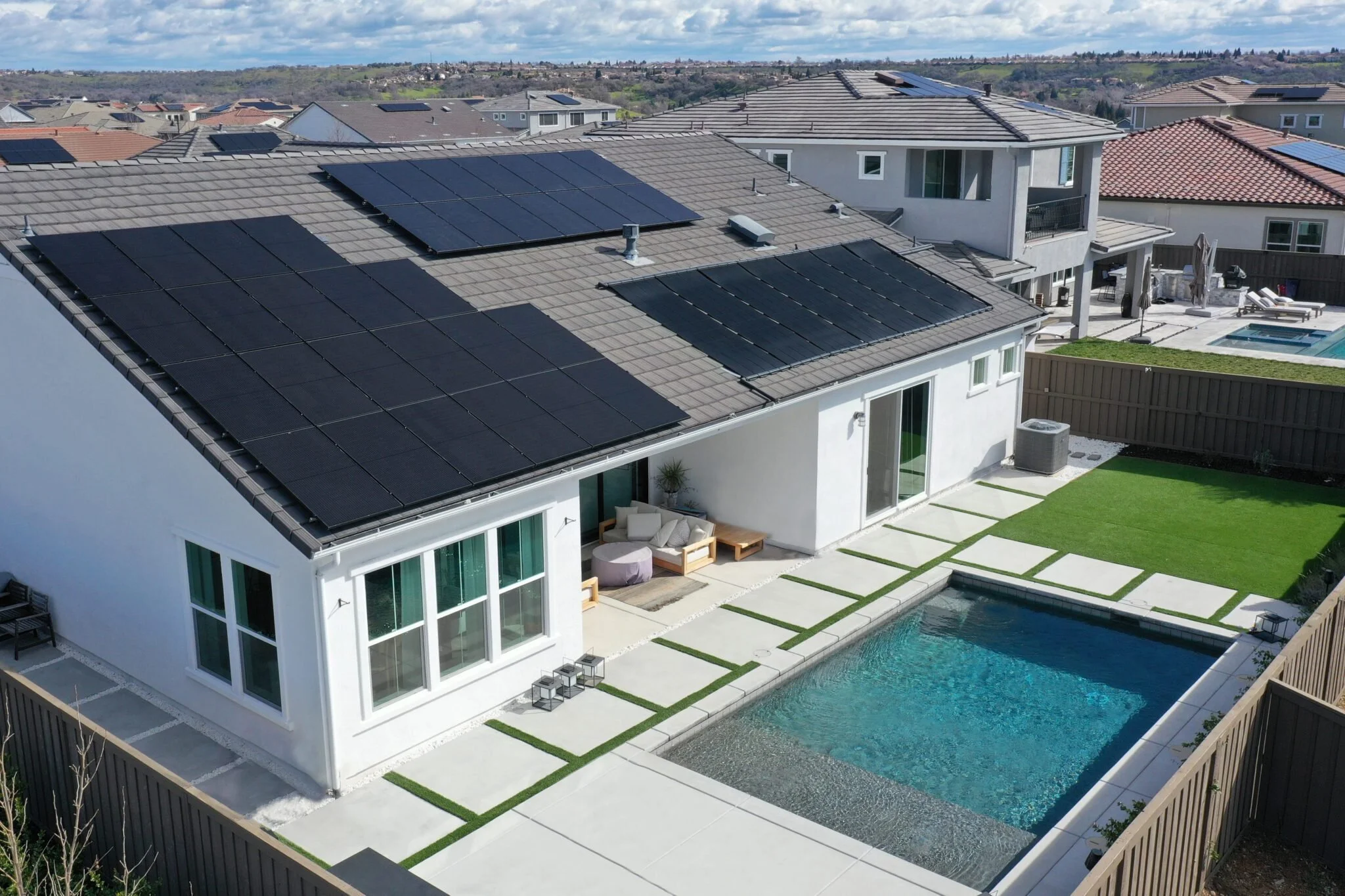
Quick answer: Most Florida homes are a good fit for solar. Your house is likely a strong candidate if your roof gets direct sun most of the day, faces south, east or west, has at least 10 to 15 good years left, and your electric bill stays high for much of the year. Shade, roof age and HOA rules can change the plan.
Solar Near Me is a Florida solar brokerage that helps homeowners compare vetted installation partners, review proposals, and choose the right solar solution. This guide walks you through the same checks we use when we look at a home, so you can get a good idea before anyone comes out.
Key takeaways
- Sun matters most. A roof with little shade from about 10 a.m. to 3 p.m. does best.
- South-facing roofs make the most power, but east- and west-facing roofs still work well in Florida.
- Panels last 25 to 30 years, so a roof near the end of its life should be replaced first.
- Florida law says HOAs cannot ban rooftop solar, though they can have a say in placement.
- The 30% federal tax credit ended after 2025, but Florida still exempts solar from sales tax and from property tax on the added home value.
Does your roof get enough sun?
Sun is the biggest factor. Solar panels make most of their power in the middle of the day, so the best roofs get direct sun from late morning through mid afternoon with little shade.
Your home is likely in good shape if:
- Most of your roof is in full sun from about 10 a.m. to 3 p.m.
- Trees, chimneys or nearby buildings do not shade the roof for long stretches
- Any shade comes mostly early in the morning or late in the day
Some shade does not rule you out. A good design places panels on the sunniest parts of the roof, and trimming one or two trees can make a big difference. If big oaks cover most of the roof, a ground-mounted system in the yard may work better.
Which way does your roof face?
In Florida, the sun sits in the southern part of the sky, so south-facing roofs make the most power over a year. East and west roofs still produce well here, and west-facing panels make more power in the late afternoon, when your AC is working hardest.
| Roof direction | How it works in Florida | Fit |
|---|---|---|
| South | Makes the most power over the whole year | Best |
| Southeast or southwest | Very close to a south-facing roof | Great |
| East or west | A little less total power, west helps with afternoon AC use | Good |
| North | The least power, so other roof sides or a ground mount often work better | Ask for a design |
| Flat | Panels are tilted on racks to face the sun | Good with racking |
Most homes have more than one roof side. A proposal can combine south, east and west sections to fit the number of panels you need. See how many solar panels a Florida home needs to understand how roof space and system size connect.
Is your roof in good shape for solar?
Solar panels usually last 25 to 30 years. Taking them off later to replace a roof adds cost, so it makes sense to check your roof before you go solar.
- Roof age: if your roof is more than about 15 years old, ask whether it should be replaced first
- Condition: no active leaks, soft spots or missing shingles
- Material: shingle and metal roofs are the simplest, tile roofs work but take more care to install, and flat roofs use tilted racks
- Space: enough open roof area for the system size you need
If your roof needs work, you do not have to manage two projects. Solar Near Me also handles roofing, so a new roof and solar can be planned together with one schedule.
How high is your electric bill?

Solar saves the most when you use a lot of power, and in Florida that usually means air conditioning running for much of the year. Look at a full 12 months of bills, not just one summer bill, and note how many kilowatt-hours (kWh) you use each month.
Higher, steady bills usually mean more room to save. Lower bills can still work, especially if rates keep rising, but the savings take longer to add up. Our guide to what solar panels cost in Florida shows how system size and price connect, and why summer bills climb explains where that power goes.
Can my HOA stop me from going solar?
No. Under Florida Statute 163.04, an HOA cannot ban rooftop solar or deny a homeowner the right to install it. An HOA can ask you to get approval first and can choose where panels go on the roof, but only if that choice does not hurt how well the system works. The Florida Solar Energy Center at UCF has a plain summary of the law.
What if I have a mobile or manufactured home?
Many manufactured home roofs are not built to carry the extra weight of panels. In that case, a ground-mounted system in the yard is usually the better choice, and it can face due south at the best angle. Solar Near Me works with mobile and manufactured home owners and can check which setup fits your property.
Will solar keep my power on during a hurricane?
Not by itself. Standard grid-tied solar systems shut off during an outage to protect line workers. To keep lights, the fridge or other key circuits running, you need a battery such as a Tesla Powerwall or an Enphase battery. Read whether a solar battery can power your house during a hurricane before you decide.
What savings can Florida homeowners still get?
- Federal tax credit: the 30% Residential Clean Energy Credit applies only to systems placed in service by December 31, 2025, according to the IRS. A new install in 2026 does not qualify.
- Sales tax: solar energy systems are exempt from Florida sales tax under Section 212.08(7)(hh), Florida Statutes.
- Property tax: the value solar adds to your home is exempt from property tax under Sections 193.624 and 196.182, Florida Statutes.
- Net metering: under Florida rule 25-6.065, investor-owned utilities like FPL, Duke Energy and TECO credit extra power you send to the grid at the full retail rate each month. Any credit left at the end of the year is paid at a lower rate. Solar United Neighbors explains how it works.
There are also several ways to pay, from cash and loans to leases with $0 upfront for qualifying homes. Compare them in our guide to ways to pay for solar in Florida.
Quick checklist: is your house ready?
| Good sign | Worth a closer look |
|---|---|
| Roof in full sun most of the day | Heavy shade from large trees |
| Roof faces south, east or west | Only north-facing roof space |
| Roof is less than about 15 years old | Roof is older, leaking or has soft spots |
| Electric bill stays high much of the year | Very low or seasonal power use |
| You plan to stay in the home for several years | You plan to sell very soon |
Frequently asked questions
Check four things: how much sun your roof gets, which way it faces, the age and condition of the roof, and your electric bills over a full year. If most of those look good, your home is likely a strong fit. A free design confirms it.
Yes. East and west roofs make somewhat less power than south roofs, but they still work well in Florida, and west-facing panels help most in the afternoon when cooling costs peak.
If your roof is more than about 15 years old or has damage, it is usually smarter to replace it first. Removing and reinstalling panels later adds cost. Solar Near Me can plan both projects together.
For many Florida homes, yes. Strong sun, high AC use, rising utility rates, net metering and Florida tax exemptions still help. Read is solar still worth it in Florida in 2026 for the full answer.
Find out if your home is a good fit
The fastest way to know for sure is a free solar review. Send us your address and a recent electric bill, and we will compare designs and prices from vetted installers for your home, with no pressure to sign.


