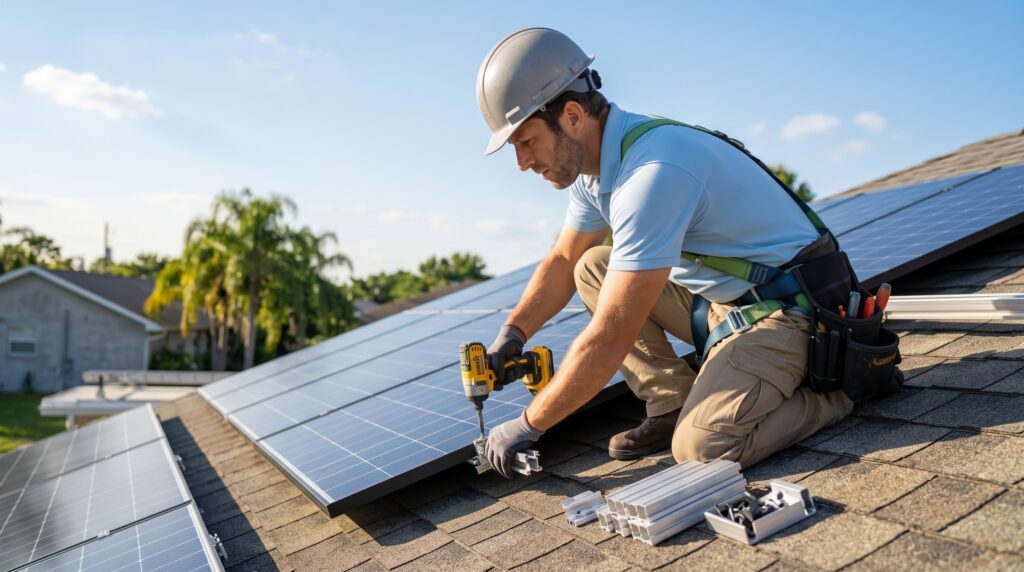



Is solar actually worth it in Florida right now in 2026? Yes for many homeowners.
Solar is often worth it if you:
✔ Pay over $150/month for electricity
✔ Have a roof with good sun exposure
✔ Plan to stay in your home several years
✔ Want protection from rising utility costs
Even without the federal residential tax credit, Florida’s sales tax exemption, property tax exemption, and net metering continue to make solar an attractive long-term investment for many homeowners.
Is Solar Still Worth It in Florida in 2026?
The answer may surprise you.
Over the past year, thousands of Florida homeowners have started asking the same question.
The federal residential tax credit ended.
Electric bills continue to rise.
Social media is full of conflicting opinions.
Some companies say solar has never been better.
Others claim it no longer makes financial sense.
So what’s actually true?
The answer isn’t simply “yes” or “no.”
For some homeowners, solar is one of the smartest long-term investments they can make.
For others, waiting or making improvements to their home first may be the better decision.
In this guide, we’ll break down what changed in 2026, who benefits most from solar today, and how to determine whether it makes sense for your home
At Solar Near Me, we believe homeowners deserve honest advice not a sales pitch. Before recommending solar, we review your electricity usage, roof condition, utility provider, and long-term goals so every recommendation is based on your home’s actual needs.
For most Florida homeowners, solar is still worth it right now, even without the federal tax credit. Florida’s sales tax exemption, property tax exemption, and full retail net metering weren’t tied to that credit, and FPL’s new four-year rate settlement is pushing electric bills higher through 2029, which only strengthens the math on the utility side.
Why Solar Still Makes Financial Sense in Florida
Florida remains one of the best places in the country to install solar panels. The state receives plenty of sunshine throughout the year, allowing homeowners to generate more of their own electricity and reduce how much they buy from the utility company.
Solar can still be worthwhile because Florida offers:
- Florida sales tax exemption on qualifying solar equipment
- Florida property tax exemption for eligible residential systems
- Strong year-round sunshine
- Full-retail net metering with many major utility providers
- Rising electricity prices that increase the value of producing your own power
Whether solar is worth it for you depends on several factors, including:
- Your monthly electric bill
- Your roof’s condition and sun exposure
- Tree shading
- Financing options
- How long you plan to stay in your home
- Your long-term financial goals
Florida Homeowners benefit from Florida’s sales tax exemption on solar equipment and the property tax exemption that allows qualifying solar systems to add value to a home without increasing property taxes.
That’s why the best answer isn’t simply “yes” or “no.” It’s whether solar makes financial sense for your home.
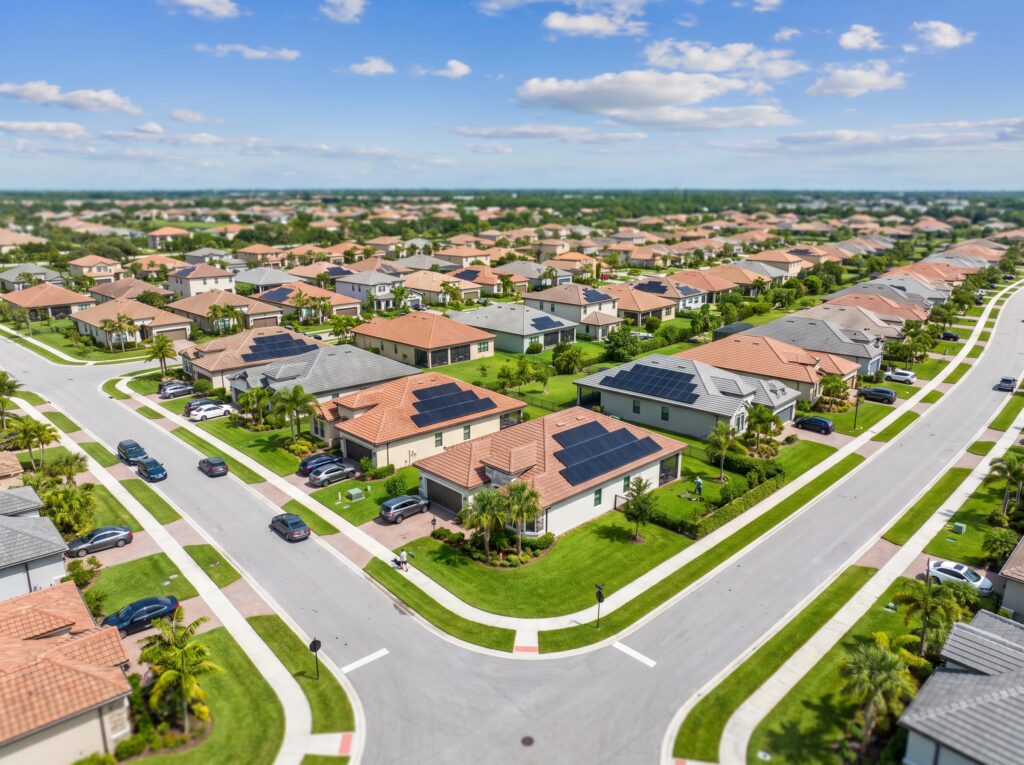
Why Are So Many Homeowners Questioning Solar in 2026?
If you’re wondering whether now is still a good time to install solar, you’re not alone. Thousands of Florida homeowners are asking the same question. Several major changes over the past year have created uncertainty.
The federal residential tax credit ended
For years, many homeowners planned around the federal Residential Clean Energy Credit. With that incentive no longer available for new residential installations after December 31, 2025, many people assumed solar no longer made financial sense. Fortunately, that isn’t the whole story. Florida continues to offer valuable state incentives that still help homeowners lower the cost of going solar.
Utility bills keep increasing
Even homeowners who never considered solar before are beginning to pay closer attention to their monthly electricity bills. As utility rates continue to increase, producing more of your own electricity becomes more attractive. The question many homeowners are asking isn’t just:
“How much does solar cost?” It’s also: “How much will I spend on electricity if I don’t go solar?” That’s an important difference.
There’s too much conflicting information online
Some articles claim every homeowner should install solar immediately. Others insist solar no longer works without the federal tax credit. The reality falls somewhere in the middle. Solar isn’t the right choice for every homeowner but for the right home, it can still provide significant long-term value.
Aggressive sales tactics have made homeowners skeptical
Many homeowners have experienced high-pressure sales presentations promising “free solar” or unrealistic savings. Those experiences understandably create hesitation. Solar is a long-term investment that deserves careful evaluation not rushed decisions. That’s why comparing multiple proposals and understanding your home’s actual energy usage is more important than ever.
What Makes Solar Worth It in Florida?
Florida has several natural advantages that make residential solar more attractive than in many other parts of the country.
Plenty of sunshine
Florida averages more than 230 sunny days each year, giving homeowners excellent solar production throughout most of the year. Long, sunny days allow solar panels to generate electricity when homes typically use the most energy especially during summer afternoons when air conditioners run almost continuously.
High cooling demand
According to the U.S. Energy Information Administration, cooling represents the largest share of household electricity use in Florida. Unlike colder climates where electricity usage fluctuates dramatically between seasons, Florida homeowners often rely on air conditioning for much of the year. That means many homes have consistent daytime electricity demand—the same time solar panels generate the most power.
Long-term savings potential
One of the biggest benefits of solar isn’t simply lowering next month’s electric bill. It’s creating more predictable energy costs over the long term. Instead of purchasing all of your electricity from the utility company, your home generates a portion of its own power. As utility rates increase over time, homeowners with properly designed solar systems may reduce their exposure to those increases.
Is Solar Actually Worth It for Your Home?
After looking at today’s incentives, utility rates, and energy costs, one thing becomes clear: Solar is still worth it for many Florida homeowners but it isn’t automatically the right choice for everyone. The homeowners who see the greatest value are those with higher electricity bills, good roof conditions, strong sun exposure, and plans to remain in their home for several years.
| Homeowner A | Homeowner B |
| Pays $280/month | Pays $75/month |
| South-facing roof | Large oak trees |
| No shade | Roof needs replacement |
| Planning to stay 15 years | Moving next year |
| Solar is likely an excellent investment | Solar may not be the best choice—yet. |
Just as importantly, some homeowners may benefit more from improving energy efficiency or replacing an aging roof before installing solar. Understanding which category your home falls into is the first step toward making the right decision not just the fastest one. Also understanding the average cost of solar in Florida and your potential savings can help you decide whether now is the right time to make the switch.
Ready to See What Solar Can Save You?

Is Solar Right for You?
Not always.
Solar works best for homeowners with a roof that gets good sunlight and an electric bill high enough to benefit from producing their own power. If your roof is heavily shaded, needs replacing soon, or you’re planning to move in the near future, it may be worth exploring your options before investing.
A good first step is understanding whether your house is a good fit for solar, since every home is different.
| Situation | Solar Likely Makes Sense |
| Electric bill over $150/month | Yes |
| Roof gets full sun | Yes |
| Staying 5+ years | Yes |
| Roof needs replacement soon | Maybe later |
| Heavy tree shade | Depends |
| Very low electric bill | Less likely |
Benefits of Going Solar in Florida
For many homeowners, solar provides the greatest value when several of these apply:
✅ Your electric bill is consistently $150 or more per month
✅ You plan to stay in your home for at least five years or longer
✅ Your roof receives good sunlight with minimal shade
✅ Your roof is in good condition and doesn’t need replacing soon
✅ You want protection against future utility rate increases
✅ You own your home rather than rent
✅ You want to reduce your long-term electricity costs
The more of these boxes you can check, the more likely solar will provide meaningful long-term savings.
Did You Know?
Florida homeowners often use the most electricity during the exact hours solar panels produce the most power.
That’s one reason Florida remains one of the best states in the country for residential solar.
When Solar May Not Be the Best Fit
One of the reasons homeowners choose Solar Near Me is because we’re willing to say when solar isn’t the best option. In some situations, waiting or making improvements first may be the smarter financial decision. Solar may not be the right fit if:
- Your roof needs replacing within the next few years.
- Large trees create significant shade for most of the day.
- Your monthly electric bills are already very low.
- You’re planning to sell your home in the near future.
- Your home’s electrical system requires major upgrades before solar can be installed.
Sometimes improving your home’s energy efficiency first such as replacing an aging HVAC system, sealing ductwork, or adding insulation can increase the value of a future solar installation.
Every home is different, which is why personalized recommendations matter.
Should You Go Solar Now or Wait?
Waiting rarely means lower electricity bills. While solar equipment prices have become more competitive over the years, utility rates continue to change, making it difficult to predict future energy costs.
For many homeowners, producing more of their own electricity now can provide greater long-term savings than waiting for the “perfect” time. If you’re comparing your options, it’s also worth knowing how to avoid common solar scams in Florida before signing a contract.
Does Waiting Save Money?
Many homeowners wonder if they should wait another year before going solar. It’s a reasonable question. After all, technology improves over time, and many people assume solar panels will become much cheaper in the future.
But there’s another side to the equation. While equipment prices have become more competitive over the years, homeowners who delay their decision continue paying monthly utility bills that may increase over time.
The question isn’t simply: “Will solar be cheaper next year?” It’s also: “How much will my utility company charge me while I’m waiting?” For homeowners with consistently high electric bills, delaying solar can sometimes cost more than the savings gained from waiting. That doesn’t mean everyone should install solar immediately but it does mean the cost of waiting should be part of the decision.
Staying With the Utility vs. Going Solar
One of the easiest ways to compare your options is to look beyond today’s monthly bill and consider the long-term picture.
| Factor | Stay With Your Utility | Go Solar |
| Monthly Bills | Continue paying utility | Offset with solar production |
| Rate Increases | Utility decides | More predictable costs |
| Home Value | No energy improvement | May increase resale appeal |
| Energy Independence | Low | Greater |
| Long-term planning | Less control | More control |
Neither option is automatically better for everyone. The right choice depends on your home’s energy usage, financial goals, and how long you plan to stay in your home.
Ready to See What Solar Can Save You?
Common Myths About Solar in Florida
There are plenty of misconceptions about solar that can make homeowners hesitant. Let’s address a few of the most common ones.
Myth: Solar isn’t worth it after the federal tax credit ended.
Reality:
While the federal residential tax credit is no longer available for new residential installations, Florida homeowners can still benefit from the state’s sales tax exemption, property tax exemption, and net metering programs. Rising utility costs also continue to influence long-term savings.
Myth: Solar eliminates every electric bill.
Reality:
Solar reduces the amount of electricity you purchase from the grid, but your final bill depends on your system size, energy usage, utility policies, and weather conditions.
Myth: Every home should install solar.
Reality:
Solar works best when the roof, energy usage, and financial goals align. For some homeowners, improving energy efficiency first may provide better value.
Myth: All solar quotes are basically the same.
Reality:
Two proposals can recommend completely different system sizes, equipment, financing options, warranties, and production estimates even if the monthly payment looks similar. That’s why comparing proposals carefully is so important.
Questions to Ask Before Signing a Solar Contract
Before signing a contract that could affect your home for the next 20–25 years, make sure you understand exactly what you’re buying.
Ask questions like:
- Is the system sized for my actual electricity usage?
- How much electricity is the system expected to produce each year?
- What assumptions were used to estimate savings?
- Which panels and inverters are being installed?
- What warranties are included?
- Who services the system after installation?
- What financing options are available?
- Will my roof need replacing before the system reaches the end of its life?
A reputable company should be willing to answer these questions clearly and without pressure.
Why Homeowners Choose Solar Near Me
Unlike companies that only offer one installer or one financing option, Solar Near Me compares multiple trusted Florida installers to help homeowners make informed decisions.
We review:
✔ Annual electricity usage
✔ Roof condition
✔ Utility provider
✔ Existing solar proposals
✔ Financing options
✔ Long-term savings
Our goal isn’t to sell the first system.
It’s to recommend the right system.
No pressure. No obligation. Just honest advice from an independent Florida solar brokerage.
Contact Solar Near Me for a Free Solar Consultation
FAQ
For many homeowners, yes.
Florida continues to offer strong year-round sunshine, a sales tax exemption, a property tax exemption, and net metering through many major utilities. Whether solar is worthwhile depends on your roof, electricity usage, financing, and long-term plans.
Every home is different. Your payback period depends on factors such as electricity usage, system size, financing, utility rates, and available incentives. Homes with higher electric bills often experience a faster return on investment than homes with lower energy usage.
Although the federal residential tax credit has ended for new residential installations, Florida homeowners may still benefit from:
- Florida Sales Tax Exemption
- Florida Property Tax Exemption
- Net metering through many major utility providers
These incentives continue to improve the long-term value of residential solar.
Solar is still worth it in Florida in 2026
Solar is still worth it in Florida in 2026 but not because someone says it is. It’s worth it when your roof, energy usage, financial goals, and long-term plans all align. The best solar decision isn’t the fastest one. It’s the one that’s based on real numbers. That’s exactly what we help homeowners understand every day.
At Solar Near Me, we take the time to review your home’s energy profile, compare your options, and help you decide whether solar truly makes sense for you. Our goal isn’t to sell you a system it’s to help you make a confident, informed decision
Contact Solar Near Me for a free Solar Consultation