
Key Takeaways
Start with your home’s electricity usage and roof condition, then compare solar panels based on their expected lifetime energy production not just the upfront price. If your roof space is limited, higher-efficiency solar panels can help you generate more electricity from less space. Because Florida has hot weather and severe storms, also look for strong temperature performance, durability, and long-term warranties.
If you’ve started comparing solar quotes, you’ve probably noticed that every company claims to have the “best” solar panels. One recommends Panel A. Another recommends Panel B. A third says efficiency is everything.
So who’s right? The truth is that the best solar panel isn’t the same for every home.
Choosing solar panels for your Florida home is about more than finding the panel with the highest efficiency rating or the lowest price.
Your roof, electricity usage, available space, Florida heat, weather, utility company, and long-term energy goals all affect which solar panels make the most sense.
For an Florida homeowner, the “best” solar panel isn’t necessarily the one with the biggest wattage or the highest efficiency. It’s the panel that gives you the right combination of energy production, durability, available roof space, warranty protection, and overall value.
This guide explains exactly how to compare solar panels like a professional before signing a 25-year agreement.
| What to Compare | Why It Matters | Best For |
|---|---|---|
| Efficiency | Produces more electricity from the same roof space | Homes with smaller roofs or more shade |
| Panel wattage | Determines how much power each panel can produce | Maximizing output with fewer panels |
| Temperature coefficient | Helps estimate performance during Florida’s hot summers | Florida homeowners |
| Product warranty | Covers manufacturing defects and equipment failures | Long-term peace of mind |
| Performance warranty | Shows how much power the panels are expected to produce over time | Comparing long-term value |
| Weather Rating | Indicates how well panels withstand wind, rain, and hail | Hurricane-prone areas |
| Inverter Type | Affects system performance and monitoring | Homes with multiple roof planes or shading |
| Total System Cost | Compares the complete investment not just the panels | Every homeowner |
A residential solar system is expected to operate for 25–30 years, which makes choosing the right equipment and the right company one of the most important home improvement decisions you’ll make.
Don’t Compare Solar Panels Like This ❌
- Highest efficiency
- Lowest price
- Biggest wattage
Compare Them Like This ✅
- Your electric bill
- Your roof
- Your utility company
- Your budget
- Expected lifetime production
- Warranty
- Total system value
How to Compare Solar Panels Like a Professional
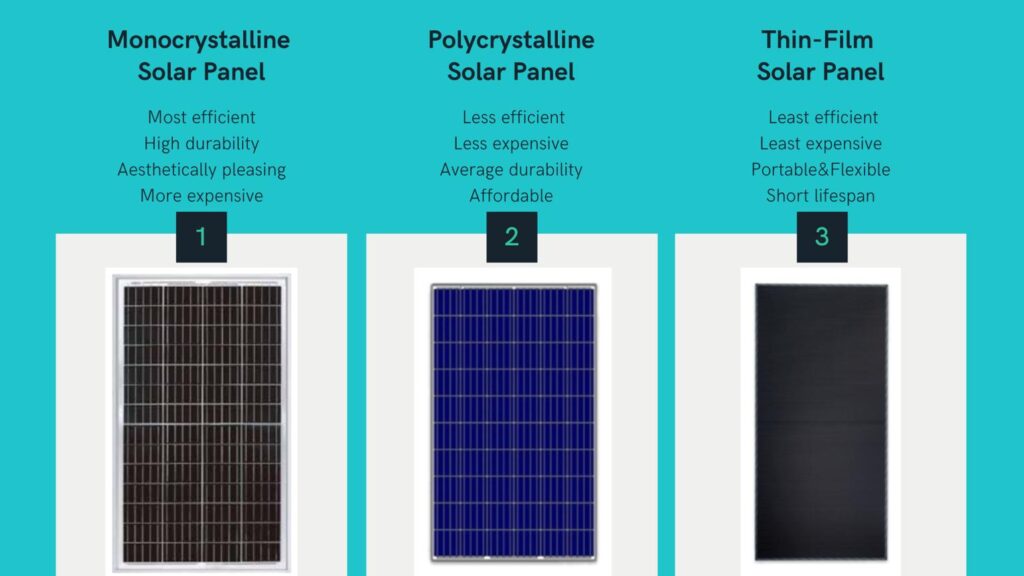
Solar panels can look very similar from the outside, but their specifications can be quite different.
When comparing panels, pay attention to these factors:
- Efficiency
- Power output
- Temperature coefficient
- Product warranty
- Performance warranty
- Durability
- Degradation rate
- Size and physical dimensions
- Manufacturer reputation
- Total system cost
The goal isn’t to find the panel with the best number in every category.
It’s to find the panel that makes sense for your specific house.
5 Mistakes Homeowners Make When Comparing Solar Panels
1. ❌ Buying Based Only on Price
The cheapest quote isn’t always the best value. Compare the equipment, system size, warranties, installation, and financing—not just the total price.
2. ❌ Buying Based Only on Efficiency
Higher efficiency doesn’t automatically mean better. Look at the panel’s production, size, warranty, and how well it fits your roof.
3. ❌ Ignoring the Inverter
The inverter is just as important as the panels. Compare the inverter type, warranty, monitoring, and how it fits your system.
4. ❌ Ignoring the Warranty
Check the panel, inverter, and workmanship warranties. Make sure you know what is covered and who handles repairs.
5. ❌ Choosing the First Quote
Don’t accept the first proposal without comparing it. Look at system size, equipment, production, price, financing, and warranties side by side.
The bottom line: Don’t compare solar panels by price alone. Compare the entire solar system and what you’re getting for your money.
1. Start With How Much Electricity Your Florida Home Uses
Before choosing a panel, determine how much electricity your home actually needs.
Look at your electric bills from the past 12 months and find your annual electricity consumption in kilowatt-hours (kWh).
This is more useful than simply telling a solar company that you have a 2,000-square-foot or 3,000-square-foot home.
Two homes with the same square footage can use dramatically different amounts of electricity.
For example, electricity usage can increase if your home has:
- Central air conditioning
- Multiple HVAC systems
- A pool
- Electric water heating
- An electric vehicle
- A large family
- Older, inefficient appliances
- Frequent air-conditioning use
- High summer electricity consumption
In Florida, air conditioning can be one of the biggest contributors to your electricity bill.
That’s why your solar system should be designed around actual energy consumption, not just your home’s square footage.
How much electricity does your home use?
A good starting point is:
Annual electricity usage ÷ 12 = average monthly electricity usage
Your installer can then use your historical consumption, roof characteristics, local solar production estimates, and equipment specifications to determine an appropriate system size.
2. Compare Solar Panel Efficiency
| What to Compare | Why It Matters |
|---|---|
| Panel efficiency | Determines how much electricity can be produced from available space |
| Panel wattage | Determines output per panel |
| Temperature coefficient | Helps estimate performance in hot conditions |
| Product warranty | Protects against certain equipment defects |
| Performance warranty | Protects expected long-term production |
| Degradation rate | Indicates how production changes over time |
| Inverter | Converts solar electricity for home use |
| Racking | Secures the panels to your roof |
| Monitoring | Lets you track system performance |
| Installation | Determines how the equipment is actually installed |
| Roof work | Important if the roof needs repairs or replacement |
| Battery | Adds backup and energy storage capabilities |
Solar panel efficiency tells you how effectively a panel converts available sunlight into electricity.
For example, if one panel has a higher efficiency rating than another panel of the same physical size, the more efficient panel can generally produce more electricity from the same amount of roof space.
This can be particularly useful for Orlando homeowners with limited roof space.
Does higher efficiency always mean better?
No.
A higher-efficiency panel can be valuable, but you shouldn’t automatically pay significantly more just because the efficiency number is higher.
Consider the entire system.
If you have a large, mostly unshaded roof, a slightly less efficient panel may still provide excellent production.
If you have a small roof, complicated roof design, or limited usable space, higher-efficiency panels may help you fit the amount of solar capacity you need.
Simple rule
Limited roof space → prioritize efficiency.
Lots of usable roof space → compare efficiency against overall system value.
3. Look at Panel Wattage
Solar panels are also rated by power output, usually measured in watts.
You’ll commonly see panels with ratings such as:
- 400 watts
- 420 watts
- 440 watts
- 450 watts
- 500 watts or more
A higher-wattage panel can produce more power per panel, but that doesn’t automatically make it the best choice.
The physical size of the panel matters too.
For example, a 450-watt panel that is significantly larger may not be a better choice than a smaller panel with a slightly lower wattage if roof space is difficult to use.
That’s why you should compare: Wattage + efficiency + physical dimensions rather than wattage alone.
See what solar could look like for your Florida home.
4. Pay Attention to Florida Heat
This is an important consideration for Florida homeowners.
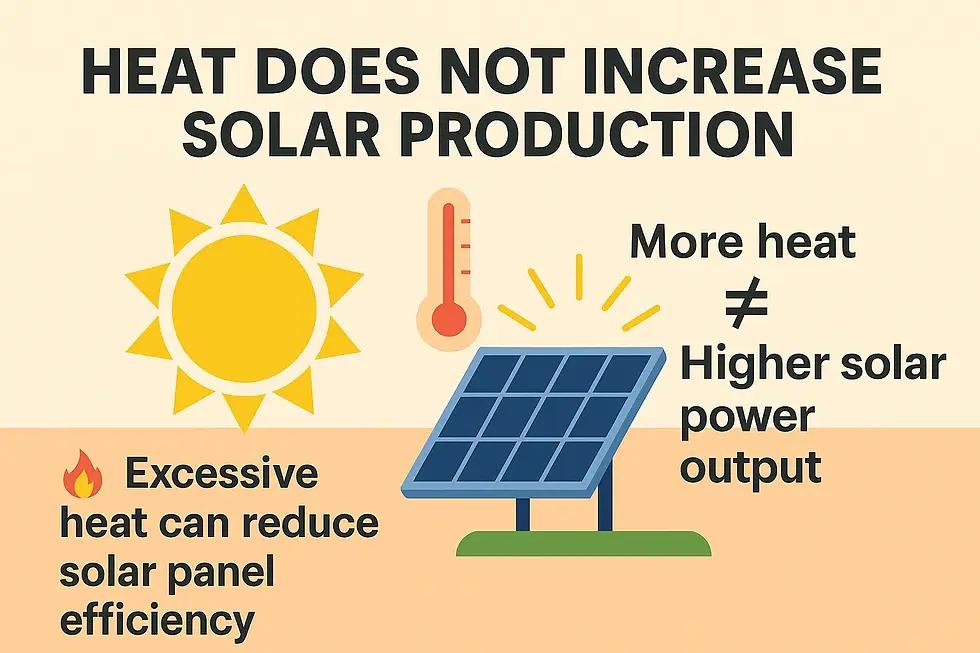
Solar panels need sunlight to produce electricity, but solar panels also get hot.
And extremely high temperatures can reduce the electrical output of photovoltaic panels.
That’s why you should look at a panel’s temperature coefficient when comparing equipment.
The temperature coefficient indicates how much a panel’s power output changes as its temperature rises above standard testing conditions.
A lower temperature coefficient is generally preferable in a hot climate because the panel tends to lose less output as temperatures increase.
Why does this matter in Florida?
Florida gets plenty of sunshine, but it also experiences long periods of hot weather.
Your solar installer should evaluate the expected production of the equipment under local conditions rather than simply showing you the panel’s laboratory-rated output.
Did you Know ? The most expensive solar panel isn’t always the best choice. For many Florida homeowners, the right combination of panel quality, inverter technology, and system design delivers better long-term value than simply choosing the highest-efficiency panel.
5. Check the Warranty
Solar panels are a long-term investment.
Don’t just ask:
“How many years is the warranty?”
Ask what the warranty actually covers.
There are generally two important types of solar panel warranties.
Product Warranty
The product warranty protects against certain manufacturing defects and equipment problems.
The exact coverage varies by manufacturer.
Performance Warranty
The performance warranty addresses how much electricity the panel is expected to produce over time.
Solar panels naturally degrade as they age, meaning their maximum electricity production gradually decreases.
A good solar proposal should clearly explain:
- Product warranty length
- Performance warranty length
- Expected degradation
- What is covered
- Who handles warranty claims
- Whether labor is included
- What happens if the manufacturer is no longer in business
Don’t assume that two panels with “25-year warranties” offer identical protection.
Read the actual warranty terms.
6. Consider Solar Panel Degradation
Solar panels don’t normally produce exactly the same amount of electricity 20 or 25 years from now as they do when they’re new.
Their output gradually declines.
This is called degradation.
When comparing solar panels, look at the manufacturer’s degradation guarantee and projected end-of-warranty performance.
A panel with a strong long-term performance guarantee can be more attractive than one that has slightly higher initial output but weaker long-term performance.
Remember:
You’re not buying electricity for one year. You’re investing in a system expected to operate for decades.
7. Choose Panels Built for Florida Weather
Florida weather is another reason you shouldn’t choose solar panels based solely on price.
Florida homeowners need to think about:
- Heavy rain
- Strong winds
- Lightning
- Tropical storms
- Hurricanes
- High temperatures
- Humidity
Your installer should be able to explain the equipment’s applicable durability and certification ratings and how the complete mounting system is designed for your property.
And remember that the panel is only one part of the system.
Your roof attachments, racking, wiring, inverter, and installation quality also matter.
A premium panel installed incorrectly is not a good solar system.
8. Look at Your Roof Before Choosing Your Panels
Your roof can determine which panel configuration makes the most sense.
An installer should evaluate:
- Roof size
- Roof pitch
- Roof orientation
- Shading
- Roof age
- Roof condition
- Obstructions
- Vents
- Chimneys
- Skylights
- Available usable roof area
What if your roof has limited space?
Higher-efficiency panels may allow you to generate more electricity without needing as much roof area.
What if your roof has lots of shade?
The issue may not be solved simply by buying a more efficient panel.
Your installer may need to consider system design, panel placement, and inverter technology to minimize the impact of shading.
9. South-Facing Isn’t the Only Option in Florida
You may hear that solar panels have to face south.
That’s an oversimplification.
The ideal orientation depends on your roof, shading, electricity consumption patterns, and system design.
East- and west-facing roof sections can also be useful.
For many Florida homes, the best solar design may involve panels on more than one roof plane.
That’s another reason not to choose equipment before having a professional site assessment.
10. Don’t Ignore the Inverter
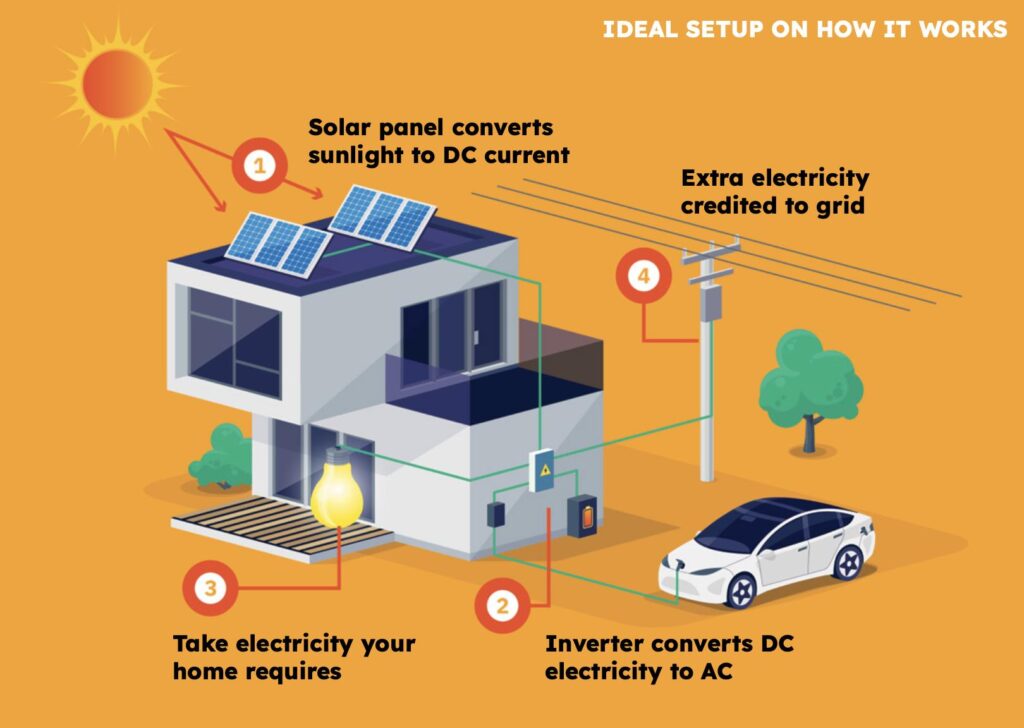
Solar panels don’t work alone.
They generate electricity as direct current (DC), while your home uses alternating current (AC).
An inverter converts the electricity into a form your home can use.
Your solar proposal may use:
- String inverters
- Microinverters
- Power optimizers combined with an inverter
The right choice depends on the design of your roof and solar array.
For example, homes with multiple roof orientations or significant shading may benefit from a system architecture that provides more individual panel-level control.
So when comparing two quotes, don’t compare only the panels.
Compare the panels + inverter + racking + installation + monitoring + warranty.
11. Make Sure the System Matches Your Florida Utility
Your utility company is another important part of the decision.
Depending on where you live, your electric utility could include providers such as FPL or OUC.
If you’re an FPL customer, for example, FPL requires customer-owned renewable systems to go through its interconnection process before installation and operation. Its current guidelines also specify that qualifying systems must be designed within its applicable requirements.
FPL’s net-metering program allows approved solar customers to send excess electricity to the grid and receive bill credits according to the applicable rules.
That means your solar system isn’t just about choosing panels.
The system needs to be properly sized, engineered, permitted, interconnected, and configured for your utility.
Ask your solar company:
- Who is my electric utility?
- How will my system be sized?
- What are the utility’s interconnection requirements?
- How will excess solar production be handled?
- What happens if I add a battery later?
- What happens if my electricity usage increases?
These questions can prevent surprises later.
12. Compare the Total Solar System — Not Just the Panels
One of the biggest mistakes homeowners make is comparing solar quotes based on the panel price.
Don’t.
Instead, compare the complete system.
A quote with cheaper panels isn’t necessarily cheaper if it comes with a weaker inverter, shorter warranty, or lower expected production.
Should You Choose the Cheapest Solar Panels?
Usually, no.
But you also don’t necessarily need the most expensive panels available.
Think about solar panels the same way you might think about an HVAC system or a new roof.
You want the right combination of:
Performance + durability + warranty + price.
A reputable installer should be able to explain why they recommend a particular panel instead of simply telling you that it’s “the best.”
Ask:
“Why is this panel a better fit for my house?”
If the answer is only “because it’s the most efficient,” ask another question.
Should Florida Homeowners Add a Solar Battery?
Solar panels and batteries solve different problems.
Solar panels generate electricity during the day.
A battery stores electricity so it can potentially be used later.
A battery can be especially interesting if your priorities include:
- Backup power
- Using more of your own solar energy
- Reducing dependence on grid electricity
- Preparing for outages
- Managing when electricity is consumed
However, not every Florida homeowner needs a battery.
If your primary goal is lowering your electricity costs, your solar installer should compare the economics of a solar-only system against a solar-plus-storage system.
Don’t assume that adding a battery automatically makes solar a better financial investment.
13. What Size Solar Panels Should You Buy?
This is where many homeowners get confused.
The question isn’t really:
“What size panel should I buy?”
It’s:
“How large should my entire solar system be?”
For example, a system could contain 20 panels rated at 400 watts each.
That would represent:
20 × 400 watts = 8,000 watts
or approximately an 8 kW DC solar array.
But the number of panels required depends on:
- Your electricity consumption
- Panel wattage
- Panel efficiency
- Roof space
- Shading
- Roof orientation
- Local solar production
- Utility requirements
- Your energy goals
This is why there isn’t one correct number of panels for every 2,000-square-foot Orlando home.
Questions to Ask Before You Sign a Solar Contract
Before choosing your solar panels, ask the installer:
About the panels
- What manufacturer makes the panels?
- What is the efficiency rating?
- What is the wattage?
- What is the temperature coefficient?
- What is the expected degradation rate?
- What does the product warranty cover?
- What does the performance warranty cover?
About the system
- What inverter are you using?
- How much electricity is the system expected to produce annually?
- How much roof space will the system use?
- How will shading affect production?
- What monitoring system is included?
- Is a battery included or optional?
About installation
- Who performs the installation?
- Who handles permits?
- Who handles utility interconnection?
- What happens if my roof needs repairs?
- What happens if there is a problem after installation?
- Who do I contact for warranty service?
About the financial side
- What is the total system price?
- What financing options are available?
- What are the monthly payments?
- What assumptions are being used for electricity savings?
- What happens if utility rates change?
- Are there any additional fees?
The Best Solar Panel for Your Florida Home Depends on Your House
There isn’t one solar panel that’s perfect for every Florida homeowner.
The right choice depends on your home’s electricity consumption, roof space, shading, budget, equipment preferences, and long-term goals.
For one homeowner, a high-efficiency panel may be worth paying more for because roof space is limited.
For another, a slightly less expensive panel may provide a better overall value because there is plenty of usable roof space.
And for another homeowner, the biggest decision may not be the panel at all—it may be choosing the right inverter, battery, system size, or installer.
The best solar proposal should show you why the equipment and system design make sense for your home.
Still Not Sure Which Solar Panels Are Right for Your Home?
Every home is different. That’s why we don’t recommend a solar panel until we’ve looked at your roof, energy usage, and goals
We’ll compare:
✔ Panel brands
✔ Warranties
✔ Inverters
✔ Roof suitability
✔ Financing
✔ Estimated savings
You don’t have to figure out panel efficiency, system size, warranties, roof space, and financing by yourself. Many homeowners spend hours comparing panel brands.
Ironically…
That’s often one of the least important parts of choosing a solar system.
The quality of the design, installation, inverter, warranties, and system sizing usually has a much bigger impact than whether one panel is 22% efficient and another is 21%.
That’s exactly why we review the entire system-not just the panels.
Solar Near Me can help Florida homeowners compare solar options and find a system designed around their home and energy needs.
Get a Free Solar Panel consultation
Still Not Sure Which Solar Panels Are Right for Your Home?
Frequently Asked Questions
What is the best solar panel for a home in Florida ?
The best solar panel depends on your roof space, electricity usage, shading, budget, and long-term goals. High-efficiency panels can be particularly useful when roof space is limited, while homeowners with plenty of usable roof space may have more flexibility.
How many solar panels do I need for my Florida home?
The number depends on your home’s annual electricity consumption, panel wattage, roof conditions, shading, and expected solar production. A 2,000-square-foot home does not automatically require a specific number of panels.
Are high-efficiency solar panels worth it in Florida?
They can be, especially when roof space is limited. However, efficiency should be compared with panel cost, warranty, durability, wattage, and expected lifetime production.
Do solar panels work well in Florida ?
Yes. Solar panels can produce electricity whenever sunlight is available. However, production varies with weather, shading, roof orientation, panel characteristics, and system design.
Does Florida heat reduce solar panel production?
Yes. Solar panel output generally decreases as panel temperature rises. This is why the temperature coefficient is an important specification to compare when selecting equipment for a hot climate.
Should I get solar panels or solar panels with a battery?
It depends on your goals. Solar panels can reduce the amount of electricity you purchase from the grid, while batteries can store energy for later use and may provide backup power during outages.
Should I replace my roof before installing solar panels?
If your roof is nearing the end of its useful life, it may make sense to address the roof before installing solar panels. Removing and reinstalling a solar array later can add unnecessary cost and complexity.
How long do solar panels last?
Solar panels are designed for long-term operation, but their electricity production gradually decreases over time. When comparing panels, look at both the product warranty and long-term performance warranty.
Can I mix different brands of solar panels?
In some cases, yes, but it’s generally best for your installer to design a system with compatible equipment that works together efficiently. Mixing panel brands without careful planning may affect performance or warranties.
What should I compare when getting solar quotes in Florida ?
Compare the complete system not just the panels. Look at panel efficiency, wattage, inverter technology, expected annual production, warranties, installation quality, roof work, monitoring, battery options, financing, and total cost.
Which solar panel brand is best?
Rather than recommending one brand for every homeowner, compare panel efficiency, warranties, degradation rates, heat performance, and the overall system design. The best panel for one home may not be the best for another.